Abstract
Background: The term "placental abruption" refers to a condition in which the fetus remains within the uterus beyond the 20th week of pregnancy, and the placenta separates from the uterine wall, either completely or partially. Placenta abruption is associated with worse fetal outcomes.
Objectives: To determine the feto-maternal consequences in pregnant females presenting with placental abruption in terms of fetal death, preterm delivery, postpartum hemorrhage, and uterine atony.
Methods: One hundred females with placental abruption were included from emergency of a tertiary care hospital in Lahore, Pakistan. Females were screened for maternal anemia, and HELLP syndrome was noted. Females were also observed for intrauterine death, mode of delivery, preterm delivery, stillbirth, postpartum hemorrhage and uterine atony were noted. Total hospital stay was also noted. All this data was recorded on proforma and analyzed in SPSS v23.
Results: The average age of the female participants in this research was 31.51 ± 7.70 years. The symptoms of abruption lasted 5.16 ± 1.48 days on average. Anemia accounted for 36 (36%), followed by pregnancy-induced hypertension (33%) and abnormal amniotic fluid index (28%) and trauma (3%). Anemia was the leading cause of abruption. Upon doing a clinical examination, it was found that 15 (15%) of the female patients had HELLP syndrome, 4 (4%) had intrauterine death, 56 (56%), had preterm delivery, 8 (8%) had stillbirths, 40 (40%) had postpartum hemorrhage, and 17 (17%) had unborn children.
Conclusion: The chances of feto-maternal consequences of placental abruption are high, especially preterm delivery and post-partum hemorrhage.
Keywords: placental abruption, intrauterine fetal death, stillbirth, postpartum hemorrhage
Introduction
The term "placental abruption" refers to a condition in which the fetus remains within the uterus beyond the 20th week of pregnancy, and the placenta separates from the uterine wall, either completely or partially [1]. Despite having a low frequency of around 0.4–1%, placental abruption accounts for 10% of neonatal fatalities in affluent nations [2, 3]. Based on the information at hand, stomach discomfort (occurs in 70% of instances), vaginal bleeding (occurs in 35–80% of cases), uterine contractions or soreness, and anomalies in the fetal heart rate (occurs in 75% of cases) are the most prevalent signs of abruption placenta [4]. Mei et al. found a substantial negative correlation between the clinical appearance of abruption placenta and worse outcomes for both the mother and the fetus, particularly when the condition was associated with stomach discomfort [5].
Uterine hypertonicity, non-reassuring fetal heart rate rhythm, and severe vaginal bleeding coupled with tetanic uterine contractions are the clinical features of abruption. The exact cause of abruption is unknown, but there are a few risk factors that have been linked to the condition, including high parity, advanced maternal age, low socioeconomic status, cigarette smoking, abdominal trauma, alcohol use, crack cocaine use during pregnancy, maternal hypertension, polyhydramnios, multiple pregnancies, thrombophilia’s and abortive history [4]. Unfavorable fetal outcomes are also noted in instances with abruption placenta, and these include intrauterine growth restriction, preterm delivery, low birth weight, fetal distress, poor Apgar score, transfer to the newborn intensive care unit, stillbirth, congenital abnormalities, and perinatal mortality, which may range from 4.4 to 67.3% [6]. In women with placental abruption and intrauterine fetal demise, bleeding during delivery was substantially higher with caesarean delivery than during vaginal birth. On the other hand, instances with vaginal deliveries had serious complications, including uterine rupture and maternal mortality. Regardless of the delivery method, women experiencing placental abruption with intrauterine fetal demise should be managed carefully [7, 8]. The prevalence of placental abruption is around 6.7% in Pakistani population and most of them tend to be asymptomatic, where the diagnosis is made when antenatal hemorrhage starts or done by the presence of retro-placental clot postpartum. The purpose of this research is to ascertain the effects on the fetus and mother when a pregnant woman presents with placental abruption. This study exclusively evaluated the outcomes of placental abruption. However, these have not been documented before. Typically, women with placental abruption remain asymptomatic in start and present late when complications start, putting them at risk for hazardous outcomes (e.g., anemia, HELLP syndrome, intrauterine fetal death, postpartum hemorrhage or preterm birth). Therefore, this study was planned to confirm the extent of problems in local population. So that in future, we may counsel females to attend antenatal visits properly to timely diagnose abruption and prevent its adverse consequences. This study would not only provide evidence for policymakers but would also alert healthcare providers to emphasis on concentrating on this problem.
Method
The term "placental abruption" refers to a condition in which the fetus remains within the uterus beyond the 20th week of pregnancy, and the placenta separates from the uterine wall, either completely or partially [1]. Despite having a low frequency of around 0.4–1%, placental abruption accounts for 10% of neonatal fatalities in affluent nations [2,3]. Based on the information at hand, stomach discomfort (occurs in 70% of instances), vaginal bleeding (occurs in 35–80% of cases), uterine contractions or soreness, and anomalies in the fetal heart rate (occurs in 75% of cases) are the most prevalent signs of abruption placenta [4]. Mei et al. found a substantial negative correlation between the clinical appearance of abruption placenta and worse outcomes for both the mother and the fetus, particularly when the condition was associated with stomach discomfort [5].
Uterine hypertonicity, non-reassuring fetal heart rate rhythm, and severe vaginal bleeding coupled with tetanic uterine contractions are the clinical features of abruption. The exact cause of abruption is unknown, but there are a few risk factors that have been linked to the condition, including high parity, advanced maternal age, low socioeconomic status, cigarette smoking, abdominal trauma, alcohol use, crack cocaine use during pregnancy, maternal hypertension, polyhydramnios, multiple pregnancies, thrombophilia’s and abortive history [4]. Unfavorable fetal outcomes are also noted in instances with abruption placenta, and these include intrauterine growth restriction, preterm delivery, low birth weight, fetal distress, poor Apgar score, transfer to the newborn intensive care unit, stillbirth, congenital abnormalities, and perinatal mortality, which may range from 4.4 to 67.3% [6]. In women with placental abruption and intrauterine fetal demise, bleeding during delivery was substantially higher with caesarean delivery than during vaginal birth. On the other hand, instances with vaginal deliveries had serious complications, including uterine rupture and maternal mortality. Regardless of the delivery method, women experiencing placental abruption with intrauterine fetal demise should be managed carefully [7,8]. The prevalence of placental abruption is around 6.7% in Pakistani population and most of them tend to be asymptomatic, where the diagnosis is made when antenatal hemorrhage starts or done by the presence of retro-placental clot postpartum. The purpose of this research is to ascertain the effects on the fetus and mother when a pregnant woman presents with placental abruption. This study exclusively evaluated the outcomes of placental abruption. However, these have not been documented before. Typically, women with placental abruption remain asymptomatic in start and present late when complications start, putting them at risk for hazardous outcomes (e.g., anemia, HELLP syndrome, intrauterine fetal death, postpartum hemorrhage or preterm birth). Therefore, this study was planned to confirm the extent of problems in local population. So that in future, we may counsel females to attend antenatal visits properly to timely diagnose abruption and prevent its adverse consequences. This study would not only provide evidence for policymakers but would also alert healthcare providers to emphasis on concentrating on this problem.
Results
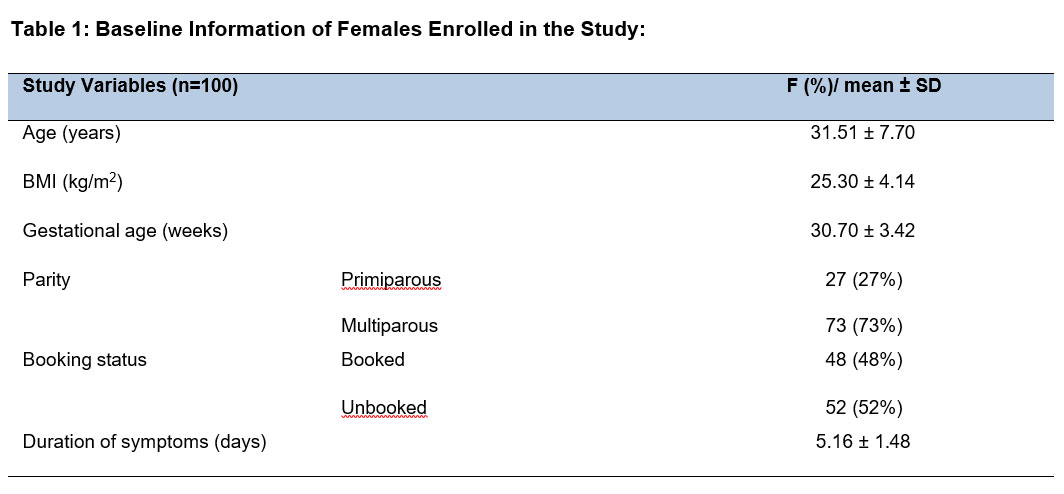
The mean age of females was 31.51 ± 7.70 years. The mean BMI was 25.30 ± 4.14 kg/m2. The mean gestational age at presentation was 30.70 ± 3.42 weeks. Out of 100 females, 27 (27%) were primiparous while 73 (73%) were multiparous. Out of 100 females, 52 (52%) females had booked status and were following antenatal visits properly, while 48 (48%) were un-booked females and present in emergency. The mean duration of abruption symptoms was 5.16 ± 1.48 days. Table 1The major cause of abruption was anemia 36
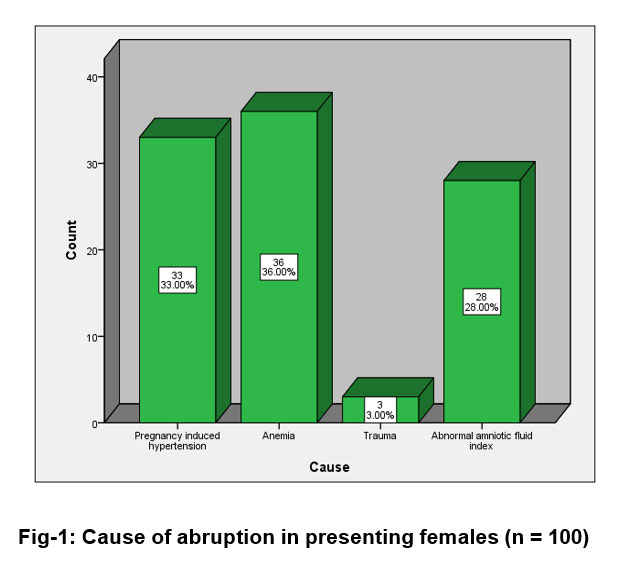
(36%), followed by pregnancy-induced hypertension 33 (33%), abnormal amniotic fluid index 28 (28%) and trauma (3 (3%). Fig 1
On fetal surveillance, intrauterine death was noted in 4 (4%) cases. Preterm delivery occurred in 56 (56%) cases and still birth was noted in 8 (8%) cases. Table 2
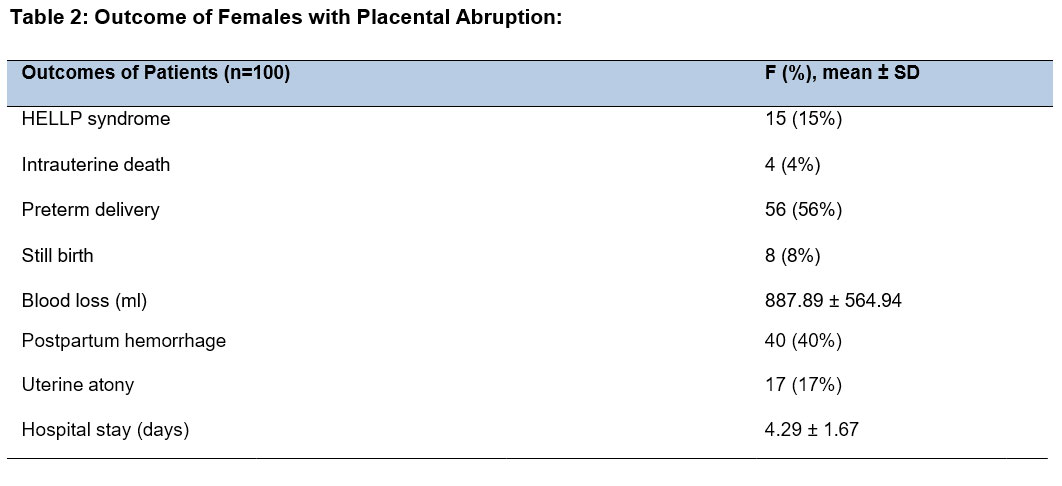
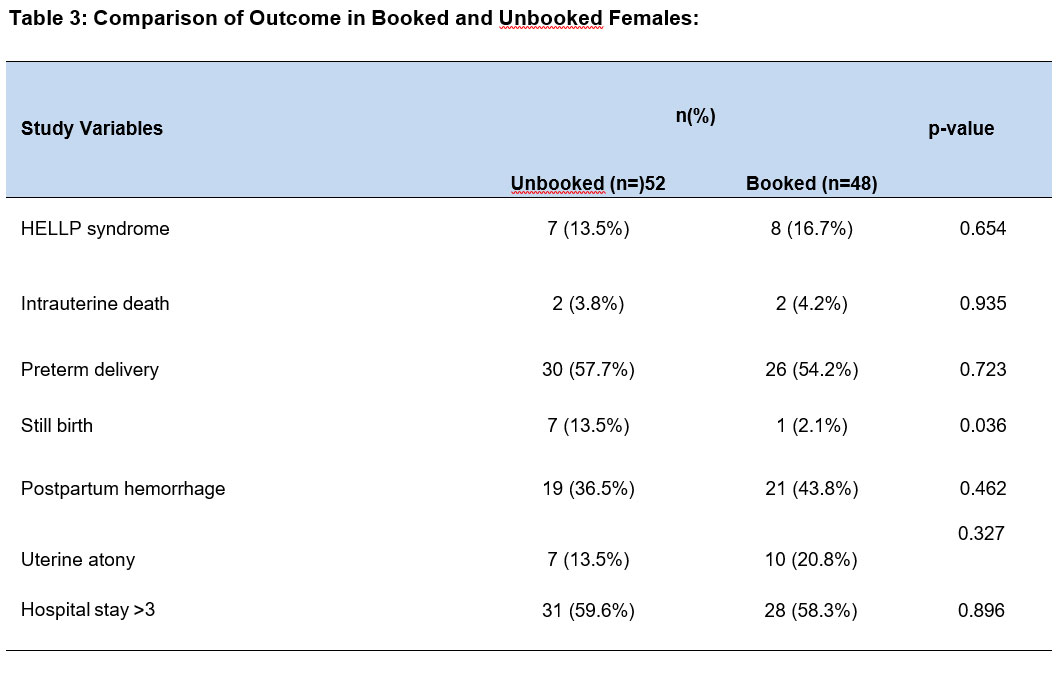
On clinical examination, HELLP syndrome was detected in 15 (15%) females. All females underwent delivery through cesarean section (100%), and mean blood loss was noted as 887.89 ± 564.94 ml. There were 40 (40%) who developed Postpartum hemorrhage after delivery. Uterine atony occurred in 17 (17%) females which was later controlled. The mean hospital stay of females was 4.29 ± 1.67 days. Table 2. Among booked and unbooked females, outcome of booked females was better than unbooked females, although the difference was insignificant (p-value >0.05) on appliance of chi-square test as explained in Table 3.
Discussion
In this study, it was indicated that the average length of time abruption symptoms persisted was 5.16 ± 1.48 days. Anaemia 36 (36%), pregnancy-induced hypertension 33 (33%), abnormal amniotic fluid index 28 (28%) and trauma 3 (3%), were the leading causes of abruption. Upon clinical examination, it was found that 15 (15%) of the female patients had HELLP syndrome, 4 (4%) had intrauterine death, 56 (56%), had
preterm delivery, 8 (8%) had stillbirths, 40 (40%) had postpartum haemorrhage, and 17 (17%) had uterine atony. Memon et al., conducted a similar study and observed that the key risk factors were preterm membrane rupture, low birth weight foetus, anaemia, multiple gestations, multigravidity, pregnancy-induced hypertension, pre-eclampsia, and recurrent caesarean sections. We also observed few of them in our study. Anaemia, pregnancy-induced hypertension; abnormal amniotic fluid index; and trauma were the leading causes of abruption in our studied population. Accordign to study by Memon et al., among the 83% of women with placental abruption who were anaemic, 91% got blood transfusions [9].
According to Siddique et al., 34% of infants were stillborn or died in utero, while 66% of newborns were delivered alive. The foetal outcome was influenced by the gestational age at presentation. Sixty-six percent of the 30 newborns that appeared before 32 weeks of gestation were stillbirths or intrauterine deaths. Of the patients, 42% underwent a caesarean section and 58% gave birth vaginally. Of the patients, 32% had grade I abruption and 34% suffered grade 3 abruption. In 18% of cases, there were postpartum haemorrhages. They came to the conclusion that all labour ward personnel needed to be knowledgeable about the origins, symptoms, and consequences of diseases, and that prompt action might assist lower the morbidity and death rates for mothers and newborns [10].
Siddiqui et al., found in a different research that abruptio placentae had considerably higher rates of perinatal death and stillbirths (52.97% against 18.18% and 534/1000 versus 230/1000, respectively; p < 0.01). In abruptio placentae, there were also noticeably more near-miss occurrences (22.27% vs 11.18%; p < 0.01). Abruptio placentae also had considerably higher rates of hypovolemic shock and coagulation failure (p < 0.05) [11].
Although it is a relatively uncommon occurrence, placental abruption has to be managed quickly. Most placental abruptions happen before to 37 weeks of gestation. One of the main causes of neonatal death and maternal morbidity is placental abruption. The woman who has placental abruption faces many risks, including bleeding disorders, particularly disseminated intravascular coagulopathy, hysterectomy, haemorrhage and the requirement for blood transfusions, and renal failure. Sheehan syndrome and postpartum pituitary gland necrosis may arise from them [12,13].
In addition to being far more prevalent, maternal anaemia and excessive blood loss were also seen in females with placental abruption. When only patients who had undergone caesarean sections were included, no statistically significant variations in blood loss were seen across the groups. Uterine atony or subatony instances were not seen [8]. It is important to note that the implications of placental abruption, regrettably, extend far beyond the perinatal stage and impact the long-term prognosis for mothers. Numerous regional investigations, meta-analyses, and a newly released umbrella review all indicated an elevated risk of cardiovascular morbidity and death [14]. Despite the lack of clarity around the association between cardiovascular illnesses and placental abruption, the extensive literature suggests that the two ailments may have an etiological component. Patients who had a history of placental abruption also had a decreased risk of breast cancer and a greater risk of lung cancer, according to findings recently presented by Riihimaki et al [15]. They were also more likely to die and had a tendency to pass away earlier than women without a history of placental abruption [16].
Placental abruption has also been linked in a number of studies to lower birth Apgar scores, a higher risk of cerebral palsy, neonatal hypoxic-ischemic encephalopathy, intracranial hemorrhage, coagulation dysfunction, breathing difficulties, longer hospital stays, and a higher frequency of intensive care unit admissions [17–19]. There exists a correlation between the proportion of prematurely split placenta and the severity of newborn problems [20,21]. In our investigation, 8 still births were found during delivery, out of which 7 were from unbooked group. Nevertheless, other investigators have shown higher rates of stillbirth and neonatal mortality in cases of placental abruption. It's interesting to note that placental abruption also increased overall mortality in children, who mostly survived, by 10-fold in the first year of life (28–365 days) and 15-fold in the newborn period (0–27 days), with the rise continuing to be substantial even after the period of time that the children were born occurred [22,23].
This was a multi-centric study. But for a multi-centric study, the sample size was very small. During study period, we also observed few other rare complications. But could not be recorded. So in future studies, comparative studies should be done to calculate risk of complications de to placental abruption with larger number of cases. In future, proper screening methods and awareness programs should be introduced to make females aware of the placental abruption and prevent its consequences.
Conclusion
In this study, we observed that the risk of adverse feto-maternal consequences are high in females having placental abruption, especially preterm delivery and post-partum hemorrhage. These complications are alarming. Now in future, we will advise females with risk of placental abruption or present with placental abruption to take special care in order to prevent feto-maternal adverse consequences.
References
- Kovo M, Schreiber L. Placental histopathology and pregnancy outcome in placental abruption. Thrombosis Update 2021;5:100087. https://doi.org/10.1016/j.tru.2021.100087
- DesJardin JT, Healy MJ, Nah G, Vittinghoff E, Agarwal A, Marcus GM, et al. Placental Abruption as a Risk Factor for Heart Failure. Am J Cardiol. 2020 Sep 15;131:17-22. https://www.ajconline.org/article/S0002-9149(20)30611-1/abstract
- Odendaal H, Wright C, Schubert P, Boyd TK, Roberts DJ, Brink L, et al. Associations of maternal smoking and drinking with fetal growth and placental abruption. Eur J Obstet Gynecol Reprod Biol. 2020 Oct;253:95-102. https://www.ejog.org/article/S0301-2115(20)30460-7/abstract
- Li Y, Tian Y, Liu N, Chen Y, Wu. Analysis of 62 placental abruption cases: Risk factors and clinical outcomes. Taiwan J Obstet Gynecol. 2019 Mar;58(2):223-226. https://doi.org/10.1016/j.tjog.2019.01.010
- Mei Y, Lin Y. Clinical significance of primary symptoms in women with placental abruption. J Matern Fetal Neonatal Med. 2018 Sep;31(18):2446-2449. https://doi.org/10.1080/14767058.2017.1344830
- Saquib S, Hamza Lama K, AlSayed A, Saeed F, Abbas M. Prevalence and Its Feto-Maternal Outcome in Placental Abruption: A Retrospective Study for 5 Years from Dubai Hospital. Dubai Medical Journal 2020;3(1):26-31. https://doi.org/10.1159/000506256
- Wada Y, Takahashi H, Sasabuchi Y, Usui R, Ogoyama M, Suzuki H, et al. Maternal outcomes of placental abruption with intrauterine fetal death and delivery routes: A nationwide observational study. Acta Obstet Gynecol Scand. 2023 Jun;102(6):708-715. https://doi.org/10.1111/aogs.14569
- Bączkowska M, Kosińska-Kaczyńska K, Zgliczyńska M, Brawura-Biskupski-Samaha R, Rebizant B, Ciebiera M. Epidemiology, Risk Factors, and Perinatal Outcomes of Placental Abruption. Int J Environ Res Public Health. 2022;19(9):5148. https://doi.org/10.3390/ijerph19095148
- Memon NY, Naz S, Soomro S, Baloch R. Frequency of anemia among patients of placental abruption. Rawal Med J 2013;38(1):56-58. https://www.rmj.org.pk/index.php?mno=22074
- Siddique S, Afridi H, Riaz B, Afridi IUK. Fetomaternal Outcome in Placental Abruption. PJMHS 2021;15(8):1971-1974. https://doi.org/10.53350/pjmhs211581971
- Siddiqui SA, Tariq G, Soomro N, Sheikh A, Shabih-ul-Hasnain F, Memon KA. Perinatal outcome and near-miss morbidity between placenta previa versus abruptio placentae. JCPSP 2011;21(2):79-83. https://www.jcpsp.pk/archive/2011/Feb2011/05.pdf
- Workalemahu T, Enquobahrie DA, Gelaye B, et al. Genetic variations and risk of placental abruption. Placenta. 2018;66:8-16. https://doi.org/10.1016/j.placenta.2018.04.008
- Schmidt P, Skelly CL, Raines DA. Placental Abruption. StatPearls Publishing; 2024. https://www.ncbi.nlm.nih.gov/books/NBK482335/
- Okoth K, Chandan JS, Marshall T, et al. Association between reproductive health and cardiovascular disease. BMJ. 2020;371:m3502. https://doi.org/10.1136/bmj.m3502
- Riihimäki O, Tikkanen M, Melin J, et al. Subsequent risk of cancer among women with placental abruption. Acta Oncol. 2019;58(1):52-56. https://medicaljournalssweden.se/actaoncologica/article/view/24337
- Riihimäki O, Paavonen J, Luukkaala T, et al. Mortality after placental abruption. Acta Obstet Gynecol Scand. 2017;96(11):1315-1321. https://doi.org/10.1111/aogs.13212
- Downes KL, Shenassa ED, Grantz KL. Neonatal outcomes associated with placental abruption. Am J Epidemiol. 2017;186(12):1319-1328. https://doi.org/10.1093/aje/kwx202
- Ni S, Wang X, Cheng X. Placental abruption with and without preeclampsia. J Matern Fetal Neonatal Med. 2021;34(9):1395-1400. https://doi.org/10.1080/14767058.2019.1637850
- Ichizuka K, Toyokawa S, Ikenoue T, et al. Risk factors for cerebral palsy due to placental abruption. J Obstet Gynaecol Res. 2021;47(1):159-166. https://doi.org/10.1111/jog.14447
- Yin X, Chen Z, Yang L, et al. Coagulation function and placental pathology in neonates with placental abruption. Int J Clin Exp Pathol. 2018;11(2):604. https://pmc.ncbi.nlm.nih.gov/articles/PMC6957995/
- Onishi K, Tsuda H, Fuma K, et al. Severity and onset-to-delivery time in placental abruption. J Matern Fetal Neonatal Med. 2020;33(22):3775-3783. https://doi.org/10.1080/14767058.2019.1585424
- Han M, Liu D, Zeb S, et al. Maternal and neonatal outcomes in placental abruption. Placenta. 2019;85:69-73. https://doi.org/10.1016/j.placenta.2019.07.003
- Riihimäki O, Metsäranta M, Paavonen J, et al. Placental abruption and child mortality. Pediatrics. 2018;142(2):e20173915. https://doi.org/10.1542/peds.2017-3915