Abstract
Background: Smoking tobacco cigarette is one of the leading cause of death throughout the world. Smoking causes various pathological changes in hematological parameters.
Objectives: The current study was planned to compare changes in complete blood count in healthy smokers and non- smokers.
Methods: Following inclusion exclusion criteria total 100 subjects participated in this study (50 smokers and 50 non- smokers). Using an automated hematological analyzer, complete blood count was done.
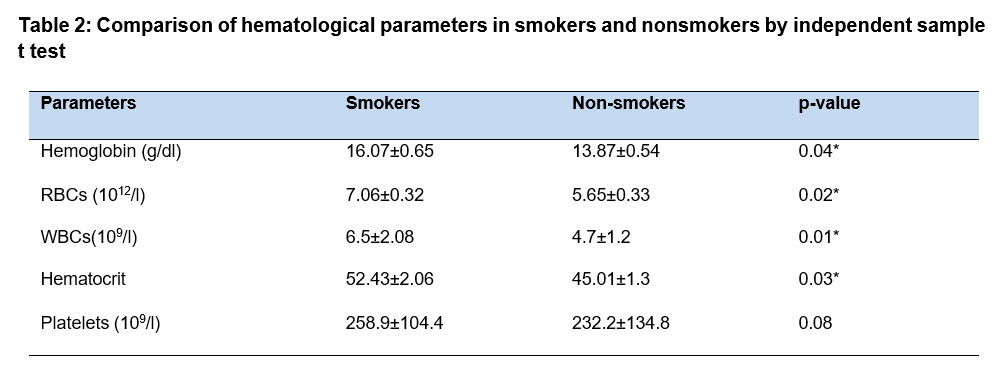
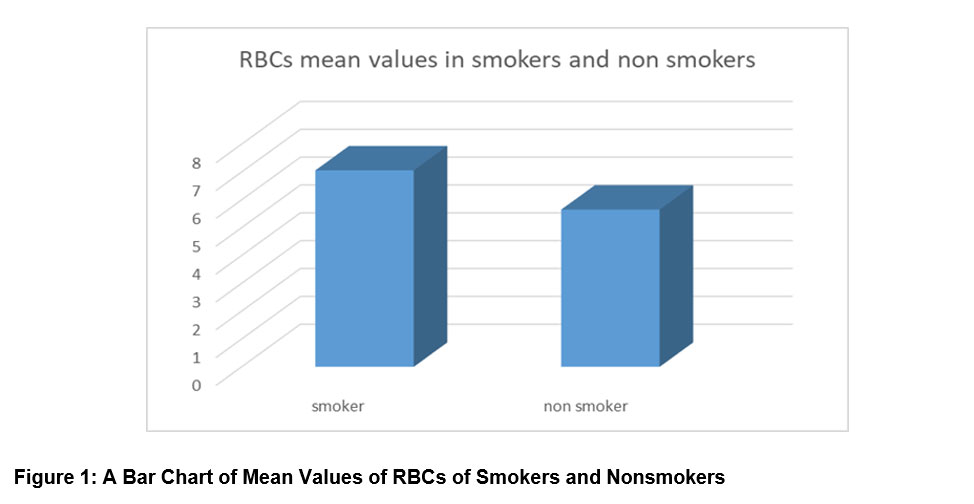
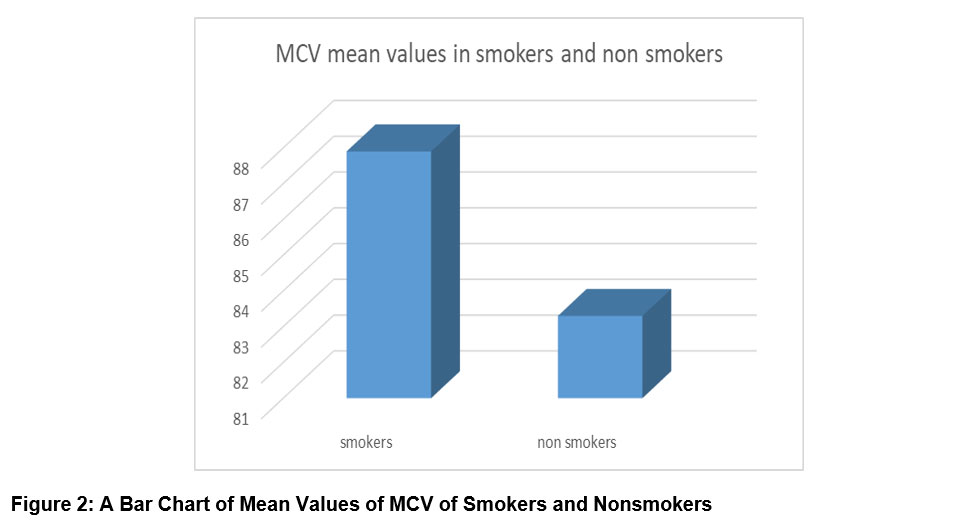
Results: Smokers have significantly higher levels of red blood cells, 7.06±0.32 in smokers, 5.65±0.33 (p value 0.02) in non- smokers, hemoglobin 16.07±0.65 in smoker, 13.87±0.54 in nonsmoker (p value=0.04), hematocrit (p=0.03), white blood cells (p=0.01) and mean corpuscular volume (p=0.001). All other measured parameters did not differ significantly.
Conclusion: Our study concluded that continuous tobacco smoking has several adverse effects on hematological parameters. These adverse changes may cause increased risk of polycythemia vera, atherosclerosis, cardiovascular diseases and obstructive pulmonary diseases.
Keywords: smoking, hematological parameters, hematocrit, complete blood count
Introduction
Tobacco smoking is one of the major public health concerns all over the world. According to an estimation made by World Health Organization 22.3% of world population use tobacco, out of which 36.7 % are males and 7.8%are females. According to a report in 2022 more than 8 million people lost their lives due to tobacco intake, among these 7 million are active smokers and 1.2 million are passive smokers (WHO, 2022). It has been reported that tobacco smoking kills more Americans as compared to number of deaths caused by HIV, alcohol intake, car accidents and illegal drugs as stated by American Cancer Society. Tobacco smoking is a leading cause of many diseases including cancer of oral cavity, larynx, lungs and pancreas [1]. It has many devastating effects on various systems of human body. Tobacco is the cause of many chronic diseases like heart diseases, various cancers and respiratory illnesses [2].
Hematological parameters varied greatly with smoking as there are as many as 4000 chemicals found in cigarette smoke which cause inflammation. Smokers inhale a variety of harmful substances including nicotine, free radicals, carbon monoxide and other gaseous products [3]. Smokers have been found to have altered White blood cells count, Red blood cell counts and Platelet counts in addition to changes in Hematocrit, Mean Corpuscular Volume (MCV) and Mean Corpuscular Hemoglobin concentration (MCHC) [4]. Tobacco cigarette smokers are reported to have raised number of red blood cells and have high hematocrit that may lead to increased risk of cardiovascular disease, hypertension, stroke and clotting disorders. Smoking increases Red Blood Cells primarily by causing tissue hypoxia due to carbon monoxide binding to hemoglobin, which triggers the kidneys to release erythropoietin, a process called secondary polycythemia. It has also been reported that smokers have high number of white blood cells i.e. neutrophils, lymphocytes, eosinophil’s, monocytes and basophils. Evidence suggests that nicotine stimulates hormonal secretion that boosts leukocyte count. Furthermore, it is worth discussing that smoke irritates respiratory mucosa that leads to inflammation and synthesizes cytokines, which subsequently raise the leukocyte count [5]. Smoking may cause damage to endothelium leading to platelet adherence to sub endothelial collagen and therefore number of platelets may vary in circulation. The previous studies on the effects of smoking on platelet count show conflicting results [6].
Increase in hematocrit and polycythemia is associated with increased risk of thromboembolism and arterial thrombosis [7]. Effects of smoking on alterations of hemostatic and hematology parameters were extensively studied, but the studies presented inconsistent results. The present study is being conducted to compare the effect of cigarette smoking on complete blood count between healthy smokers and age-matched nonsmokers.
Method
Sample size was calculated by WHO calculator taking confidence interval 95%, power of study 80%, prevalence 11.6% [15]. Males with age between 25 to 60 years were included. Males with drug history (iron supplements, heroine and cannabis indicia in last six months) and respiratory diseases like asthma and myeloproliferative diseases were excluded. Total 100 subjects participated. Two groups were made. Group 1 included 50 males who never smoked. Group 2 had 50 regular male smokers (>5 cigarettes per day at least for 1 year). All subjects participating in this study were recruited after taking informed consent. Data collection proforma was completed by face to face interview. History, general physical examination was conducted and results were collected on questionnaire proforma. Five ml blood was drawn from cubital veins of smokers and nonsmokers and was collected in EDTA test tube for hematological tests. Automated hemocytometer was used to measure complete blood count.
Data was entered and analyzed by using IBM-SPSS version 20. Normality of data was checked by Shapiro Wilk test of normality. Independent sample t-test was applied to compare complete blood count and blood indices of smokers and nonsmokers. Results were represented as mean ± SD. Significance level was set as p value less than 0.05. Ethical approval of study was taken from Institutional/Ethical Review Board of FJMU with number (No 42/Research proposal/Physiology/FJ/ERC dated 10.08.2021). It is a cross-sectional comparative study conducted in the Department of Physiology, Fatima Jinnah Medical University in collaboration with Department of Pathology, Fatima Jinnah Medical University Lahore
Results
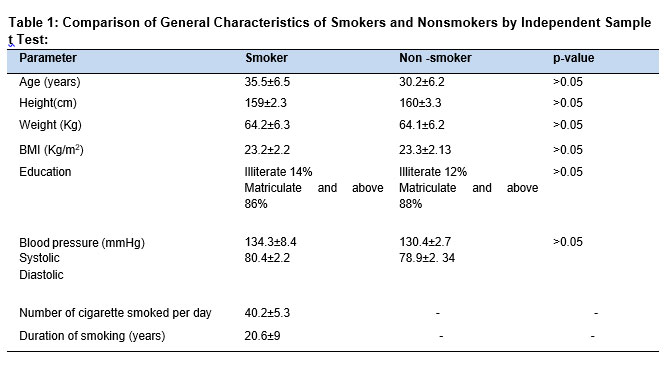
This study was conducted on 100 subjects’ 50 smokers and 50 nonsmokers. General characteristics are given in table 1.
Hematological Parameters: Level of Hb, hematocrit, RBCs, WBCs and platelets were compared by independent sample t test and showed a significant difference in Hb , WBCs, RBCs and hematocrit as given in Table 2.
Discussion
Smoking is preventable cause of death and its trend is increasing day by day. Smoking results in atherosclerosis, polycythemia, chronic obstructive pulmonary disease and cardiovascular diseases. Initial change in biochemical parameters is the variation of hematological parameters. So, a study was planned to compare the hematological parameters of otherwise healthy smoker with nonsmokers. The result of the current study showed that cigarette smoking affects the hematological parameters of otherwise healthy smokers. There is significant increased values of Hb, RBCs, hematocrit and WBCs among smokers as compared to nonsmokers. According to another study smoking had a significant negative effect on hematological parameters and there was a significant difference in hematological parameters of smokers and nonsmokers [8]. It had been found that HCT, RBC and Hb was significantly higher in smokers as compared to nonsmokers. Our study also showed significantly increased value of MCH, MCHC, MCV and RDW among smokers as compared to nonsmokers. Similarity was also seen in the study conducted by Milic et al showing increased values of MCH, MCHC, MCV in smokers [9]. WBC count of smokers was also significantly high as compared to non-smokers. According to this study, there was no significant difference in platelet count between smokers and non-smokers. This result is supported by other studies conducted in 2020 and 2023 [10,11]. Exposure to carbon monoxide can be thought to cause of an increase in hemoglobin concentration as carboxy hemoglobin is an inactive form of hemoglobin that does not carry oxygen and it shifts oxyhemoglobin curve to left reducing oxygen supply to various tissue [11]. So the rise in hemoglobin concentration in smokers may be due to the compensatory mechanism. However, some researchers failed to find any significant effect of smoking on concentration of hemoglobin and RBCs. It may be due to the reason that the subjects participating in those studies were smoking for less duration8.So further studies are needed to find the effects of smoking on hematological parameters. Increased in hematocrit may be due to increased hematopoiesis caused by increased secretion of erythropoietin caused by tissue hypoxia [12]. As in this study smokers have higher MCV and MCH than nonsmokers. However, in another study it was found that there was no significant difference in MCV and MCH between smokers and nonsmokers. In addition to this it was found that smokers have high number of WBCs than nonsmokers, but how smoking is associated with increased in WBC the reason is not yet cleared .Some researchers suggested that nicotine induced release of catecholamine and steroids can cause increase in number of leukocytes [13].
This study clearly shows that cigarette smoking has adverse effects on various hematological parameters. Increase in WBCs and hematocrit can be a marker of smoking induced damage of the tissues. This raised count can become cause of cardiovascular diseases due to several pathological mechanisms that can cause hypercoagubility, plugging of microvasculature inflammation promoting expansion of infarct [6]. Smoking may cause endothelial damage and overall disturbance of hemostatic system. Early detection of endothelial damage can be helpful in early diagnosis of atherosclerosis. Several studies have shown that WBC count is an independent predictor of cardiovascular diseases [14]. The high WBC count in smokers than non- smokers taking part in our study may suggest that they might be at greater risk of developing cardiovascular diseases than nonsmokers.
Conclusion
It can be concluded from this study that cigarette smoking is associated with raised RBC count, concentration of hemoglobin, hematocrit, leukocyte count, mean corpuscular volume and mean corpuscular hemoglobin concentration. These changes may cause atherosclerosis and cardiovascular diseases.
References
- Bashir BA, Gibreel MO, Abdalatif HM, Mohamed MA, Ahmed EA, Mohamed MS, Hamid KA. Impact of tobacco cigarette smoking on hematologic parameters among male subjects in port Sudan Ahlia College, Sudan. Sch J Appl Med Sci 2016;4:1124-8. https://www.saspublishers.com/article/9587/10.36347/sjams.2016.v04i04.006
- Malenica M, Prnjavorac B, Bego T, Dujic T, Semiz S, Skrbo S. Effect of cigarette smoking on haematological parameters in healthy population. Med Arch 2017;71:132-36. https://doi.org/10.5455/medarh.2017.71.132-136
- Besime Inal , Tuba Hacıbekiroglu, Bilger Cavus Al. Effects of smoking on healthy young men’s hematologic parameters. North Clin Istanb. 2014 Aug 3;1(1):19–25. https://doi.org/10.14744/nci.2014.39974
- Aldosari KH, Ahmad G, Al‐Ghamdi S, Alsharif MH, Elamin AY, Musthafa M, Abbas MY, Alqarni AA, Alqudeebi SK, Binsaqer AA, Al‐Ghamdi The influence and impact of smoking on red blood cell morphology and buccal microflora: A case‐control study. J. Clin. Lab. Anal. 2020 Jun;34(6):e23212. https://doi.org/10.1002/jcla.23212
- Asif M, Karim S, Umar Z, Malik A, Ismail T, Adeel Choudhary et Effect of cigarette smoking based on haematological parameters: comparison between male smokers and non-smokers. Turk. J. Biochem 2013; 38(1): 75-80. https://doi.org/10.5505/tjb.2013.68077
- Pujani M, Chauhan V, Singh K, Rastogi S, Agarwal C, Gera K. The effect and correlation of smoking with platelet indices, neutrophil lymphocyte ratio and platelet lymphocyte ratio. Hemato Transf and Cell Ther. 2020;7(1):10-15. https://doi.org/10.1016/j.htct.2020.07.006
- Folsom AR, Wang W, Parikh R, Lutsey Hematocrit and incidence of venous thromboembolism. Res pract thromb haem.2020;4(3): 422-8. https://DOI:10.1002/rth2.12325
- Sherke BA, Vadapalli K, Bhargava DV, Sherke AR, Gopireddy MMR. Effect of number of cigarettes smoked per day on red blood cell, lecocyte and platelet count in adult Indian male smokers – A case control study. Inter J Med Res Heal Sci. 2016; 5(2):13-7.
- Milic M, Gazibara T, Pekmezovic T, Kisic Tepavcevic D, Maric G. Tobacco smoking and health-related quality of life among university students: Mediating effect of depression. Plos one. 2020;15(1): e0227042. https://doi.org/10.1371/journal.pone.0227042
- Jensen K P, Valentine G, Gueorguieva R, Sofuoglu M. Differential effects of nicotine delivery rate on subjective drug effects, urges to smoke, heart rate and blood pressure in tobacco smokers. Psychopharmacol.2020; 1-11. https://doi.org/10.1007/s00213-020-05463-6
- Mohamed SE, Eid HA, Moazen EM, El-Fattah A, Doaa Impact of chronic cigarette smoking on blood count indices, erythrocyte sedimentation rate and C-reactive protein as inflammatory markers in healthy individuals.JRAM. 2023 Jan 1;4(1):74-85. https://doi.org/10.21608/jram.2022.178852.1194
- Habibe İN. Change of complete blood count parameters according to blood type and J Exp Clin Med. 2023;40(1):37-41. https://doi.org/10.52142/omujecm.40.1.8
- Siddiqui N, Mushtaq S, Ghaffar S, Zafar A, Rehman S, Aleem Variation in hematological parameters due to tobacco cigarette smoking in healthy male individuals.TPMJ. 2023 Jan 31;30(02):264-9. https://doi.org/10.29309/TPMJ/2023.30.02.7339
- Hasan HM, Arhouma TA, Khanfar MM, Azzam Study the Relationship between the Nicotine and Lipid Profile with Some Hematology Parameters in Serum of Smoker and Non-Smoker Blood Samples. Journal of Biosciences and Medicines. 2022 May 30;10(6):20-36. https://doi.org/10.4236/jbm.2022.106003
- WHO. (2025). WHO global report on trends in prevalence of tobacco use 2000–2024 and projections 2025–2030 (6th edn). World Health Organization. https://www.who.int/publications/i/item/9789240116276