Abstract
Background: For oral diseases, hygiene is essential. Clinicians studied gender-based oral health awareness and practices. Recognizing differences improves oral health and guides actions.
Objective: This study investigated gender differences in oral hygiene awareness and habits within the targeted study population sample.
Method: A cross-sectional study was conducted among patients visiting Watim Dental College, Rawalpindi. The sample size was calculated using OpenEpi software, and participants were recruited through non-probability consecutive sampling. A structured questionnaire was administered to gather information on oral hygiene awareness and practices across both genders. The questionnaire included items related to brushing habits, use of adjunctive hygiene aids, dental visit frequency, and knowledge of common oral diseases. Data entry and analysis were performed using the Statistical Package for Social Sciences (SPSS) version 26, employing descriptive and inferential statistics to assess gender-based differences in oral health awareness and behaviors.
Results: The study included 385 patients, with a mean age of 32.02±16.11 and a gender distribution of 38.18% male and 61.82% female. Most patients (95.32%) brush and use toothpaste (90.13%). patients brush twice a day (50.64%) and use toothpicks (33.50%) or none (31.94%). Many (62.33%) brush their tongue and know the importance of oral hygiene (76.88%). Many patients visit dentist only when they have a problem (75.84%). Comparative gender analysis shows considerable oral hygiene knowledge and practice variations. Compared to males, females have higher education levels (p
<.001), participate in more cleaning behaviors (p <0.001), brush more regularly (p 0.04), clean their tongue (p <0.001), and have higher knowledge (p <0.001) and perception of oral hygiene (p <0.03). Halitosis (p 0.60), visits (p 0.42), and interdental cleaners (p=0.65) were similar.
Conclusion: Females exhibit more favorable oral hygiene and practices as compared to males. Oral health interventions to bridge existing gaps and promote better overall oral hygiene.
Keywords: Awareness, Dental care, Oral Hygiene, Oral Health
Introduction
Oral diseases represent a significant and widespread category of non-communicable diseases (NCDs) that impact individuals regardless of gender, race, age, or socioeconomic status. To underscore the global impact of oral health issues, it is important to highlight that approximately 50% of adults worldwide experience untreated dental caries [1, 2]. Effective oral hygiene practices, including regular brushing, flossing, and dental check-ups, are essential for preventing a range of dental issues such as cavities, gum disease, and halitosis [3]. However, there is growing recognition that gender may play a role in shaping individuals' awareness of and adherence to these practices [4].
Gender-based differences in health-related behaviors have been a topic of interest in various fields, and oral health is no exception. Research indicates that gender may influence health perceptions, behaviors, and access to healthcare resources, potentially leading to disparities in oral hygiene practices [5, 6]. For instance, studies have shown that women often exhibit more proactive health behaviors, including greater adherence to preventive health measures, compared to men. Conversely, men may demonstrate lower levels of oral health awareness and less consistent hygiene practices [7, 8]. Previous research had identified variations in the prevalence of dental issues between genders, noting that men generally exhibit a higher incidence of periodontitis, while women tend to experience a greater prevalence of dental caries [8, 9]. Although earlier studies have highlighted gender-based differences in oral health and behaviors, there is a scarcity of recent research investigating whether these disparities continue to persist [8, 10].
Variations in oral health can contribute to disparities in clinical indicators of disease, health behaviors, and perceptions of oral health, leading to unequal burdens of oral disease across genders. Given the close connection between oral health and overall health, it is crucial to determine whether these gender disparities still exist. This study aimed to examine gender-based disparities in oral hygiene awareness and practices among patients at Watim Dental College, Rawalpindi. In particular, it sought to determine whether female patients demonstrate higher oral health knowledge and more favorable hygiene behaviors than male patients, a pattern observed in prior research on adult populations. The objective of the study was to assess gender-wise awareness differences regarding oral hygiene among male and female patients presenting to Watim Dental College, Islamabad.
Method
An Observational study was conducted on patients at Watim Dental College, Rawalpindi, from January 2024 to June 2024. The sample size was calculated using OpenEpi software to achieve a 95% confidence level with a ±5% margin of error for a population of 1,000,000. Thus, a sample of 385 was determined. Non-probability consecutive sampling techniques were employed to enroll patients. All patients attending the Dental OPD, regardless of gender and age group (ranging from 7 to 87 years), were. Patients with a history of systemic diseases that could affect oral health were excluded. Additionally, patients who were pregnant, had any form of tobacco intake, or received prophylaxis during the past 6 months were also excluded. Oral hygiene awareness and practices were assessed using a structured questionnaire based on OHAQ validated10 questionnaire updated accordingly that included variables such as age, gender, tooth cleaning habits (dichotomous “Yes” or “No”), types of cleaning agents (e.g., “Toothbrush and Toothpaste”, “Toothbrush and Tooth powder”, “Miswak”, and “Dandasa”), Interdental cleaners (e.g., “None”, “Dental floss”, “Interdental brush”, and “Toothpick”), tongue cleanliness (dichotomous “Yes” or “No”), Halitosis (dichotomous “Yes” or “No”), knowledge regarding oral hygiene (dichotomous “Yes” or “No”), perceived oral hygiene necessity (dichotomous “Yes” or “No”), and frequency of dental visits (e.g., “Only in problem”, “Every 3 months”, “Every 6 months”, and “Once a year”).”
Ethical approval was obtained from the Academy’s Ethical Review Board (Reference number: Ltr no: WMDC/R&D/ERB/2024/187 dated 03-12-24), and fully informed verbal consent was obtained from all patients in accordance with the tenets of the Helsinki Declaration. Data entry and analysis were performed using Statistical Package for Social Sciences (SPSS) version 26. Descriptive analysis was conducted for continuous variables such as age and mean and standard deviation were calculated. Similarly, categorical variables were reported as frequency and percentage distributions. For inferential statistics comparing gender-based differences in oral hygiene practices and awareness, normality of the outcome variables was assessed using the Shapiro-Wilk test, which revealed a non-normal distribution. Consequently, the Mann-Whitney U test was applied to assess differences. The significance level was set at 0.05.
Results
The study includes 238 patients, out of that 61.75% were males and 38.25% were females. The demographics have been discussed as under:
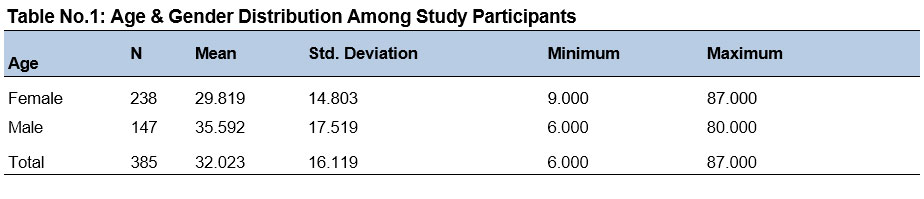
Table 1 presents demographic characteristics related to age and gender among study participants. It includes valid data for females (n = 238) and males (n = 147), with a total sample size of 385. On average, participants were approximately 32 years old (mean = 32.02, SD = 16.119). The age range varied from 6 to 87 years.
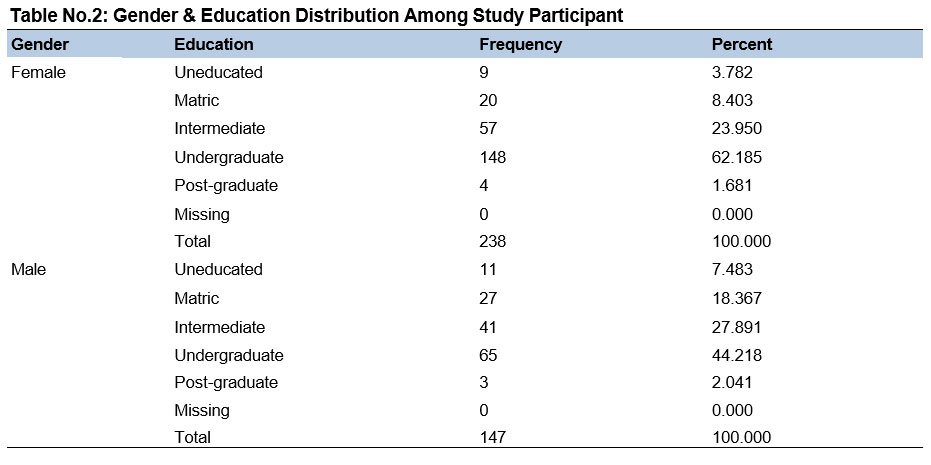
Table 2 provides an overview of the distribution of gender and education levels among study participants. For females (n = 238), the majority were undergraduates (62.19%), followed by intermediate (23.95%) and matric (8.40%) education. Post- graduates constituted a smaller percentage (1.68%). Among males (n = 147), the highest proportion had undergraduate education (44.22%), followed by intermediate (27.89%) and matric (18.37%) levels. Post-graduates accounted for 2.04%.
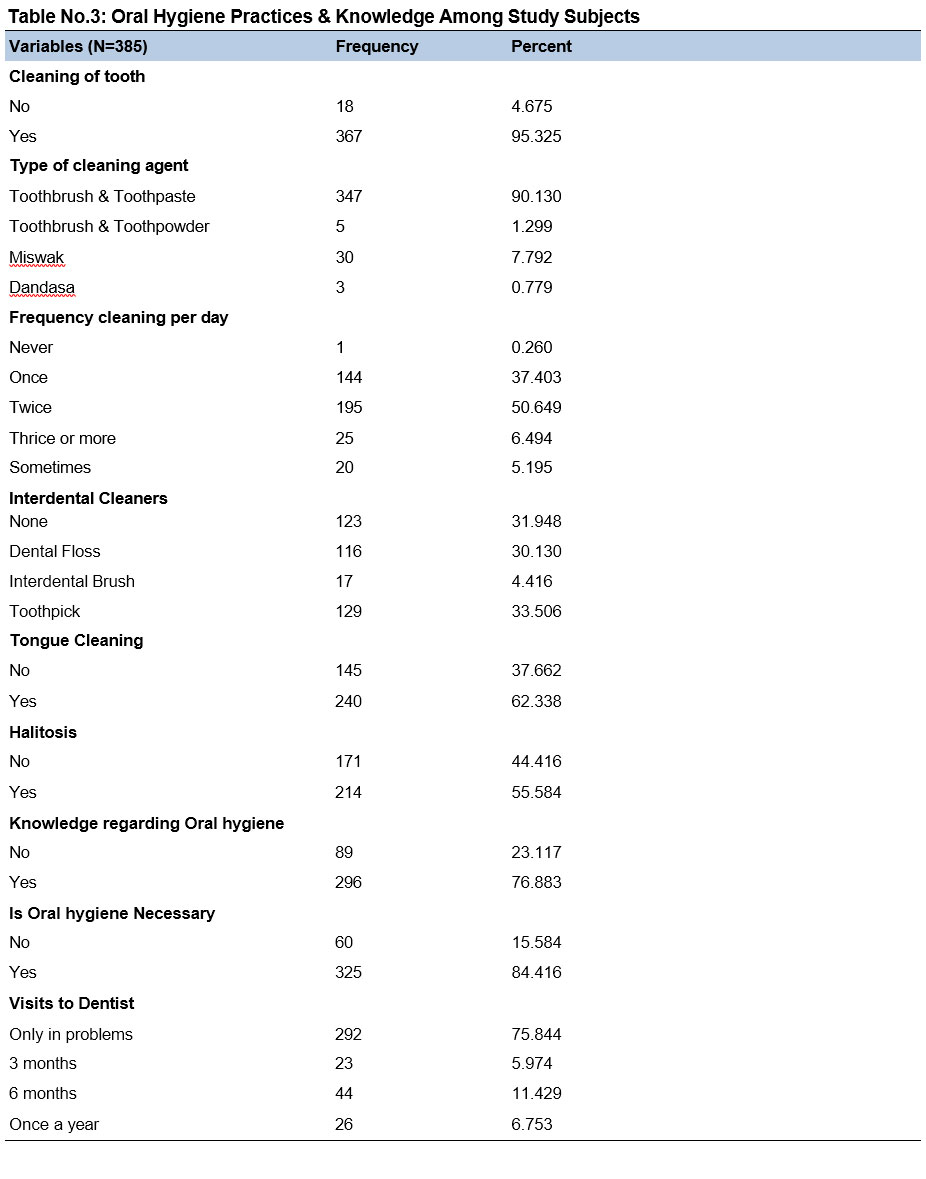
Table 3 provides insights into oral hygiene practices and knowledge among study participants. It covers variables such as cleaning habits, types of oral hygiene tools used, frequency of cleaning, interdental cleaners, tongue cleaning, halitosis, knowledge levels, and the perceived necessity of oral care. These results can lead to well informed future interventions by allowing better understanding of oral health behaviors.
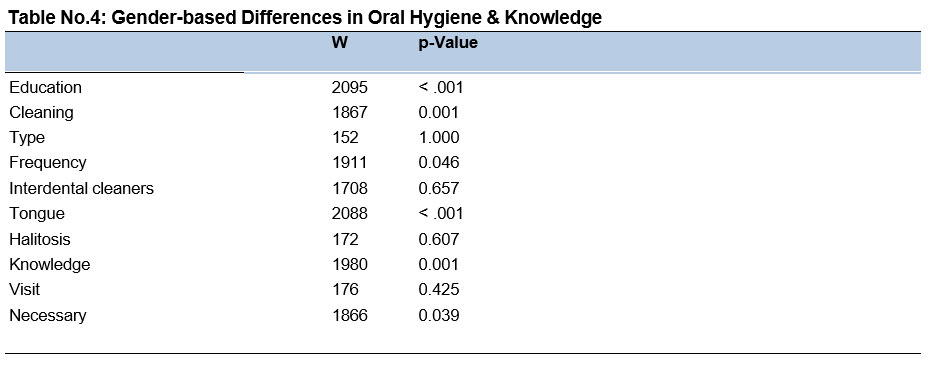
Mann-Whiteny U test
Table 4 presents a comparative analysis of knowledge & oral hygiene practices between female and male study participants. The outcomes indicate that there are significant differences between males and female in several aspects of oral hygiene. Females tend to have higher education levels, engage more in cleaning practices, clean more frequently, clean their tongue more often, and have a higher knowledge and perception of the necessity of oral hygiene compared to males.
Discussion
This study aimed to explore gender differences in oral hygiene practices and knowledge among patients at Watim Dental College. The results, obtained from a diverse cohort with a mean age of 32 years, reveal notable differences between genders in various aspects of oral health behaviors and perceptions. Inconsistent with previous research, our findings showed that there is a difference between gender differences in oral health outcomes and behaviors [11]. Specifically, our study showed that women demonstrated superior oral health practices and behaviors, including more frequent dental visits, flossing, oral cancer screenings, restorations, and adherence to dentist recommendations. Similarly, findings from the previous study revealed that men are less likely to schedule regular dental appointments, opting instead to seek care primarily for acute issues like pain [12, 13]. In contrast, women are more inclined to visit the dentist regularly for preventive care and planned treatments. This observation aligns with broader research indicating that men typically use healthcare services less frequently and are less proactive about preventive care. The demographic data indicate a significant difference in age between genders, with males being older on average (mean age 35.6 years) compared to females (mean age 29.8 years). This age discrepancy might reflect differing health-seeking behaviors or life stages influencing oral health practices. Educational levels also varied by gender, with a higher percentage of females holding undergraduate degrees (62.19%) compared to males (44.22%). This disparity in education levels could be contributing to differences in health knowledge and practices.
The current study observed that an impressive 95.3% of participants engaged in tooth cleaning, with toothbrush and toothpaste being the predominant tools used by 90.1% of them. Alternative cleaning methods, such as Miswak and Dandasa, were less common, utilized by only 7.8% and 0.8% of participants, respectively. This indicates a strong preference for traditional oral hygiene products, despite the availability of alternative methods. Frequency of brushing revealed that 50.6% of participants adhered to the recommended practice of brushing twice daily. However, a significant portion of the sample brushed only once a day (37.4%) or less frequently (5.2%), highlighting areas for potential improvement in oral hygiene practices. Comparatively, studies by Naseem S. and Butt F. align with our findings, showing a range where 19% to 57.7% of participants brushed once daily, and 38.5% to 76% brushed twice daily [13, 14]. Elizabeth and Dosumu’s study also supports these trends, reporting 57.7% brushing once daily and 38.5% twice daily [15]. These results underscore the need for continued emphasis on the benefits of regular brushing and exploring strategies to promote more consistent oral hygiene practices across different populations. Regular cleaning is critical for preventing dental issues, and interventions might be needed to encourage more consistent habits.
Regarding interdental cleaning, a significant proportion of participants (68.1%) did not use any interdental cleaners. Among those who did, toothpicks were the most common choice (33.5%), followed by dental floss (30.1%). The lower use of interdental brushes and other tools may indicate a need for greater education on the benefits of different interdental cleaning options. Tongue cleaning was reported by 62.3% of participants, which is relatively high but still leaves room for improvement. This practice is important for overall oral hygiene as it helps reduce bacteria and bad breath. Recent studies highlight the benefits of chewing sticks, particularly Miswak. These sticks exhibit an inhibitory effect on Staphylococcus aureus colonies and have variable impacts on other bacterial strains. They also demonstrate fungistatic properties and possess anti-mycotic effects. Additionally, advanced periodontal disease and dental decay are relatively uncommon among individuals who regularly use Miswak [16-19].
The study found that 76.9% of participants had knowledge regarding oral hygiene, and 84.4% perceived oral hygiene as necessary. This high level of awareness is positive; however, the disparity in knowledge and perceived necessity between genders suggests that targeted educational programs might benefit male patients, who generally scored lower in these areas. In contrast to our study literature showed that poor knowledge about hygiene is the major barrier in maintain oral hygiene [16]. Significant differences were observed in education (p < .001), cleaning practices (p = 0.001), and knowledge (p = 0.001), among other factors. These results underscore the need for gender-specific approaches to oral health education and interventions. For instance, enhancing awareness and accessibility of preventive care for men might help address the observed gaps in oral hygiene practices and knowledge.
The findings of this study emphasize the importance of tailored educational strategies and targeted interventions to improve oral health outcomes across genders. Health practitioners should consider incorporating gender-specific elements into oral hygiene education programs and actively promote the benefits of regular, comprehensive oral care. Additionally, addressing barriers such as access to care and knowledge gaps could help improve oral health practices among underrepresented groups.
Conclusion
This study revealed clear gender differences in oral hygiene behaviors and knowledge among patients at Watim Dental College. Women generally practiced better oral care than men, including more frequent dental visits, greater use of preventive measures, and higher adherence to dental advice. Although most participants brushed regularly and showed good awareness of oral hygiene, gaps remained, particularly in interdental cleaning and twice-daily brushing habits. These findings underscore the importance of targeted, straightforward educational efforts, particularly for male patients, to raise awareness of preventive care and promote healthier daily habits. Improving access to oral health information and promoting consistent hygiene habits could help reduce the observed disparities.
Limitations:
This study was limited by its single-center design, which may reduce the generalizability of the results. Self- reported data may also introduce recall or social desirability bias. Additionally, the sample's age and education differences between genders could have influenced the outcomes. Future research involving multiple centers and larger, more diverse populations is recommended.
Acknowledgement:
The authors acknowledge the use of AI- based tools for language editing and clarity enhancement. The final content, interpretation, and conclusions remain the sole responsibility of the authors.
References
- Rajeh. Gender Differences in Oral Health Knowledge and Practices Among Adults in Jeddah, Saudi Arabia. Clin Cosmet Investig Dent. 2022;14:235-244. https://doi.org/10.2147/CCIDE.S379171
- Riad A, Al-Khanati NM, Issa J, Zenati M, Abdesslem NB, Attia S, Krsek. Oral health-related knowledge, attitudes and behaviours of Arab dental students: multi-national cross-sectional study and literature analysis 2000–2020. Int J Environ Res Public Health. 2022;19(3):1658. https://doi.org/10.3390/ijerph19031658
- Mazur M, Bietolini S, Bellardini D, et al. Oral health in a cohort of individuals on a plant-based diet: a pilot study. Clin Ter. 2020;171(2):e142–e148. https://doi.org/10.7417/ct.2020.2204
- Karuveettil V, Krishna K, Ramanarayanan V. Is gender a risk factor for oral diseases in India? A metadata exploration. Public Health and Toxicology. 2022;2(1):7. https://doi.org/10.18332/pht/145517
- Riad A, Buchbender M, Howaldt HP, Klugar M, Krsek M, Attia S. Oral health knowledge, attitudes, and behaviors (KAB) of German dental students: descriptive cross-sectional study. Front Med. 2022;9:852660. https://doi.org/10.3389/fmed.2022.852660
- Su S, Lipsky MS, Licari FW, Hung. Comparing oral health behaviours of men and women in the United States. Journal of Dentistry. 2022;122:104157. https://doi.org/10.1016/j.jdent.2022.104157
- Abbas Ali S, Sadatullah S, Ali A, Elmahdi A, Ibrahim W. Determinants of dental health care seeking behaviour in Aseer Province, Kingdom of Saudi Arabia. Ann Med Health Sci Res. 2020;10:1034–1039. https://doi.org/10.2147/CCIDE.S379171
- Lipsky MS, Su S, Crespo CJ, Hung M. Men and oral health: a review of sex and gender differences. Am J Mens Health. 2021;15(3):15579883211016361. https://doi.org/10.1177/15579883211016361
- Lukacs JR, Largaespada LL. Explaining sex differences in dental caries prevalence: saliva, hormones, and “life-history” etiologies. Am J Hum Biol. 2006;18(4):540-55. https://doi.org/10.1371/journal.pone.0293024
- Aranza D, Nota A, Galić T, et al. Development and Initial Validation of the Oral Health Activities Questionnaire. Int J Environ Res Public Health. 2022;19(9):5556. https://doi.org/10.3390/ijerph19095556
- Farsi N, Merdad Y, Mirdad M, et al. Oral health knowledge, attitudes, and behaviors among university students in Jeddah, Saudi Arabia. Clin Cosmet Investig Dent. 2020;12:515–523. https://doi.org/10.2147/CCIDE.S272986
- Riad A, Buchbender M, Howaldt HP, Klugar M, Krsek M, Attia S. Oral health knowledge, attitudes, and behaviors (KAB) of German dental students: descriptive cross-sectional study. Front Med. 2022;9:852660. https://doi.org/10.3389/fmed.2022.852660
- Islas-Granillo H, Casanova-Rosado J, De La Rosa-Santillana R, et al. Self-reported oral hygiene practices with emphasis on frequency of tooth brushing: a cross-sectional study of Mexican older adults aged 60 years or more. Medicine. 2020;99(36):e21622. https://doi.org/10.1097/MD.0000000000021622
- Tayyaba Zia, Alok Dubey, Tania Naveel, Syma Arshad, Mohamed Gamal Elsehrawy, Sajad Ahmad. Knowledge, Attitude and Practices (KAP) of Oral Hygiene among School Children. Pakistan J Med Health Sci. 2022;16(04):503. https://mail.pjmhsonline.com/index.php/pjmhs/article/view/897
- Alshahrani S, Alshuaibi A, Alkhaldi M, Koppolu P. Perception and knowledge of patients from different regions in the kingdom of Saudi Arabia towards oral hygiene and oral hygiene aids. Healthcare. 2021;9(5):592. https://doi.org/10.3390/healthcare9050592
- Beyene DH, Shashamo BB, Digesa LE, Tariku. Oral Hygiene Practices and Associated Factors among Patients Visiting Private Dental Clinics at Hawassa City, Southern Ethiopia, 2018. Int J Dent. 2021;2021:8868308. https://doi.org/10.1155/2021/8868308
- Mir HA, Sharif M, Asif A, Shamim M, Qureshi M, Akhtar. Effectiveness of Miswak as Compared with Toothbrush: A Cross-Sectional Study. Pakistan Armed Forces Med J. 2021;71(5):1582-84. https://doi.org/10.51253/pafmj.v71i5.7295
- Hotchandani SS, Harjani PR, Punjabi SK, Al Absi MA, Azam HM, Ahmed. Understanding oral hygiene practices, behaviors and myths to deal with Toothache in Rural Areas. J Univ Med Dent Coll. 2022;13(1):316-9. https://doi.org/10.37723/jumdc.v13i1.575
- Hassan H, Zaidi ZF, Shakoor A, Asad R, Fatima R, Mir B. Oral Hygiene Practices of Rural and Urban School Going Children in Punjab. Nat J Health Sci. 2024;9(1):29-32. http://dx.doi.org/10.21089/njhs.91.0029