Abstract
Background: Dysmenorrhea, characterized by painful menstruation, is classified as primary or secondary. Primary dysmenorrhea commonly affects women under 25 years of age and is associated with absenteeism, reduced academic performance, and limitations in daily activities. However, research focusing specifically on female medical students remains limited, despite their exposure to unique academic and psychosocial stressors.
Objective: To determine the frequency of primary dysmenorrhea among female medical students, assess its impact on quality of life and daily functioning, and identify the management practices used for symptom relief.
Method: A descriptive cross-sectional study was conducted among 323 female medical students aged 18–25 years from six medical institutes in Pakistan between March and June 2024. Data were collected using a self-designed, structured, and validated questionnaire that was pilot-tested for clarity and reliability. Married students and those with secondary dysmenorrhea were excluded. Quality of life was assessed using functional indicators, including absence from academic activities, reduced concentration, inability to perform routine tasks, and limitation of physical activities. Data was analyzed using SPSS version 26. Descriptive statistics were used to calculate frequencies and percentages, and associations between dysmenorrhea severity and quality-of-life indicators were assessed using the chi-square test, with p < 0.05 considered statistically significant.
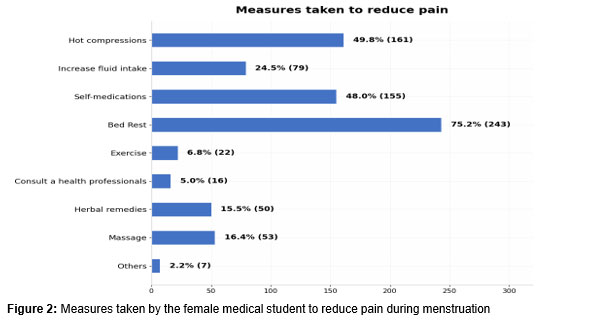
Results: Primary dysmenorrhea was reported by 96.9% (n=313) of participants. Severity, assessed using the WaLIDD score (0–12), showed a statistically significant association with impaired quality of life and functional status (p < 0.05). Higher severity scores were associated with reduced working ability, increased absenteeism, and impaired academic performance. Specifically, 68.4% (n=221) reported difficulty concentrating, 30.3% (n=98) difficulty learning, 26.3% (n=85) difficulty memorizing, 19.8% (n=64) hesitancy in group participation, and 18% (n=58) absenteeism, while only 19.5% (n=63) reported no academic impact. Common coping strategies included bed rest (75.2%, n=243), hot compresses (49.8%, n=161), self-medication (48%, n=155), massage (16.4%, n=53), and herbal remedies (15.5%, n=50).
Conclusion: Primary dysmenorrhea is highly frequent among female medical students and is significantly associated with impaired quality of life and daily functioning. Improved awareness and effective management strategies are needed to reduce its academic and functional burden.
Keywords: Dysmenorrhea; Quality of Life; Students, Medical; Pakistan
Introduction
Dysmenorrhea refers to painful uterine cramps occurring just before or during menstruation 1. It is classified as primary or secondary 1, 2. Primary dysmenorrhea, defined as menstrual pain without identifiable pelvic pathology, is highly prevalent among women under 25 years of age 3. In contrast, secondary dysmenorrhea is associated with underlying conditions, most commonly endometriosis 4. The pathophysiology involves excessive prostaglandin production via the cyclooxygenase pathway, resulting in increased uterine contractions, ischemia, hypoxia, and stimulation of pain receptors 5, 6.
Besides pelvic pain, affected individuals frequently experience systemic symptoms such as headache, dizziness, nausea, vomiting, bloating, backache, and sleep disturbances, including insomnia 7, 8, 9.
Dysmenorrhea significantly impairs quality of life by affecting daily activities, academic performance, and social participation, often leading to missed academic sessions and reduced productivity 10, 11. Globally, its prevalence ranges from 16.8% to 81.0%, with symptoms typically declining after 25 years of age 12. Management strategies include pharmacological treatment with non-steroidal anti-inflammatory drugs (NSAIDs) and non-pharmacological approaches such as hot compression, exercise, and acupuncture 6.
Despite its high global prevalence, limited data are available regarding the burden and impact of primary dysmenorrhea in Pakistan 13. Cultural stigma and taboos surrounding menstruation discourage open discussion and healthcare-seeking behaviour, contributing to underreporting and normalization of menstrual pain as a condition that must be endured 14, 15. Taken together, these studies indicate that while primary dysmenorrhea is highly prevalent and significantly affects daily life and academic performance, its true burden remains under-researched in Pakistan, underscoring the urgent need for studies addressing its prevalence, impact, and management strategies among young women.
Therefore, this study was conducted to determine the frequency and severity of primary dysmenorrhea among young women in Pakistan and to evaluate its impact on daily activities, academic performance, and overall quality of life, as well as the coping strategies adopted for pain management.
Method
A descriptive cross-sectional study was conducted among female medical students enrolled in public and private medical colleges across multiple regions of Pakistan from March to June 2024. The study aimed to assess the frequency, characteristics, and impact of dysmenorrhea on quality of life. Ethical approval was obtained from the Institutional Review Board (IRB) of Shifa International Hospital (IRB #0467-23 dated 15-02-2024). Informed consent was obtained from all participants, and confidentiality and anonymity were ensured. The sample size of 323 participants was calculated assuming the prevalence of dysmenorrhea as 70%, based on previous studies reporting prevalence between 70% and 90% among young women 3, 4, with a 95% confidence interval and a 5% margin of error. A non-probability convenience sampling technique was used to recruit participants. Data were collected using a self-designed, structured, and pre-tested questionnaire comprising 38 items across five domains: demographic characteristics, menstrual cycle patterns, pain characteristics, self-management practices, and impact on quality of life. The WaLIDD score, a validated instrument, was used to classify dysmenorrhea severity 16. To assess quality of life, a self-developed questionnaire was designed based on previously published literature, covering domains including academic performance, daily functioning, and psychological impact. Content validity was established through expert review, and pilot testing demonstrated high internal consistency (Cronbach’s alpha = 0.894). Quality of life scores ranged from 10 to 44, with higher scores indicating greater impairment.
Participants included female students aged 18–25 years. Those who were married, had secondary dysmenorrhea, or had known gynaecological or menstrual conditions associated with dysmenorrhea were excluded. Data were collected via an online Google Form, with responses securely stored and anonymized before analysis. Data analysis was performed using SPSS version 26. Descriptive statistics were calculated for demographic variables, dysmenorrhea severity, and quality of life scores. The severity of dysmenorrhea was categorized using the WaLIDD scale as follows: 0 (no dysmenorrhea), 1–4 (mild), 5–7 (moderate), and 8–12 (severe). A simple linear regression analysis was conducted to assess the relationship between dysmenorrhea severity (independent variable) and quality of life scores (dependent variable). A p-value of < 0.05 was considered statistically significant.
Results
A total of 323 female medical students participated in the study, with an age distribution of 18–19 years (29.1%, n=94), 20–21 years (42.1%, n=136), 22–23 years (20.7%, n=67), and 24–25 years (8%, n=26). Primary dysmenorrhea (PD) was assessed using the WaLIDD scale, revealing that 3.1% (n=10) reported no dysmenorrhea (score 0), 23.5% (n=76) experienced mild dysmenorrhea (scores 1–4), 51.7% (n=167) reported moderate dysmenorrhea (scores 5–7), and 21.7% (n=70) indicated severe dysmenorrhea (scores 8–12). Age-wise analysis showed that moderate dysmenorrhea was most common among students aged 20–21 years (n≈72), while severe dysmenorrhea was slightly higher in the 24–25-year group (n≈18). Most participants experienced pain for 1–2 days (79.9%, n=258), 3–4 days (14.9%, n=48), and five days or more (0.9%, n=3).
66.6% (n=215) reported onset of menstrual pain within three years of menarche, while 33.4% (n=108) developed it later. Family history of PD was positive in 26.3% (n=85) and negative in 73.7% (n=238), with a higher proportion of moderate and severe dysmenorrhea observed among those with a positive family history. Menstrual duration was less than five days in 19.5% (n=63), 5–7 days in 74.3% (n=240), and eight or more days in 6.2% (n=20), with 83.9% (n=271) reporting regular cycles and 16.1% (n=52) irregular cycles. The mean quality of life score was 24.72, with a significant negative association between frequency of dysmenorrhea and quality of life (p < 0.05); linear regression showed that a 1-unit increase in dysmenorrhea frequency produced a 0.583-unit decrease in quality of life.
Figure 1 displays the range of symptoms experienced, including body aches, irritability, fatigue, bloating, nausea, vomiting, headaches, dizziness, transient loss of consciousness, diarrhea, mood swings, changes in appetite, and insomnia, with students aged 20–23 years (n=141) reporting a broader spectrum of symptoms. Medical student–specific challenges were notable. Dysmenorrhea negatively affected concentration during lectures, focus on study, and performance during clinical ward rotations.
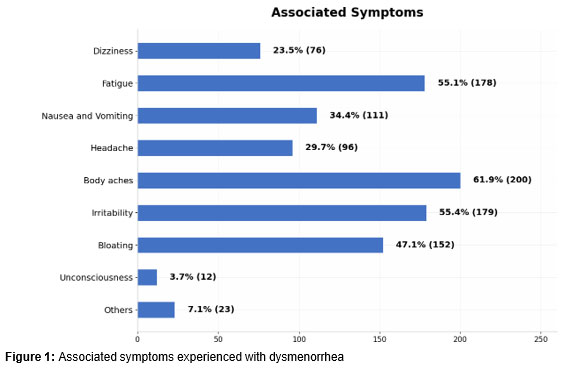
Many students reported difficulty attending clinical duties, participating in practical sessions, or maintaining attention during long study hours, highlighting the impact of dysmenorrhea on academic and professional responsibilities.
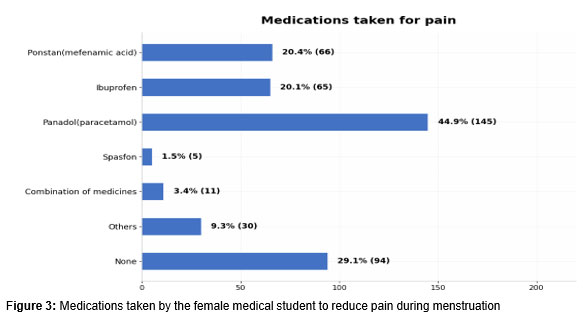
Various coping strategies were used, as shown in Figure 2. Bed rest was the most common, followed by warm compresses, self-medication, increased fluid intake, massage, herbal remedies, light exercise, and warm bathing. Among those who used medication (Figure 3), paracetamol (44.9%, n=145), mefenamic acid (20.4%, n=66), and ibuprofen (20.1%, n=65) were the most common, with others including naproxen, hyoscine butylbromide, drotaverine, and intravenous diclofenac for severe cases; 29.1% (n=94) relied solely on alternative strategies. Medication use was higher among students with severe dysmenorrhea (n=50), reflecting the need for stronger symptom management.
Among students who used medication, the most commonly reported drugs were paracetamol (44.9%, n=145), mefenamic acid (20.4%, n=66), and ibuprofen (20.1%, n=65). Other medications included naproxen, hyoscine butylbromide, drotaverine, and intravenous diclofenac for severe dysmenorrhea. A smaller number of students used spasmolytics such as phloroglucinol or combinations of different medications. Interestingly, 94 students (29.1%) did not take any medication and relied solely on alternative coping strategies, as depicted in Figure 3.
Discussion
The results revealed a high frequency of primary dysmenorrhea among female medical students, with more than 70% reporting symptoms and 51.7% experiencing moderate dysmenorrhea, often accompanied by emotional distress due to pain. Age-wise, moderate dysmenorrhea was most common among students aged 20–21 years, while severe dysmenorrhea was slightly higher in the 24–25-year group. Most participants experienced pain for 1–2 days (79.9%), and the majority reported regular menstrual cycles (83.9%) lasting 5–7 days, with early onset of pain within three years of menarche in 66.6% of students. A positive family history of dysmenorrhea was reported by 26.3% of participants, which was associated with higher severity. Despite this high frequency, primary dysmenorrhea has not been widely studied in Pakistan and remains underreported. In line with our results, one study among university students in Pakistan revealed a 92.7% frequency 17, whereas another study in a similar geographical setting reported a 91.5% frequency 13. Similar trends have been observed internationally. Studies from Lebanon reported a frequency of 80.9% 18, while research from Ethiopia and other low and middle income countries shows prevalence ranging from 50–85% 19, 20.
Determining this frequency is important because it highlights the gravity of the situation and its consequences, including absenteeism, anxiety, depression, poor productivity, and social withdrawal. Similar findings were noted in Lebanon, where gastrointestinal symptoms and systemic discomfort were frequently reported alongside pain 18, suggesting that multi-systemic symptoms are common and may affect quality of life. Similarly, a study conducted at the St. Paul College of Pharmacy, Hyderabad, India, revealed common symptoms among those experiencing dysmenorrhea, including lack of interest in performing activities (95.7%), abdominal cramps (87.4%), backaches (86.8%), mood changes (85.6%), and generalized weakness (78.1%) 19. Another study conducted in Ethiopia reported lower abdominal pain (50.7%), back pain (25.5%), headache (16.8%), and fatigue (6.7%) as the most common symptoms among participants 20. In our study, students also reported irritability, bloating, nausea, vomiting, headaches, dizziness, transient loss of consciousness, diarrhea, mood swings, changes in appetite, and insomnia, indicating a broader spectrum of symptoms compared to previous reports. Knowledge about these symptoms can help devise effective awareness programs and improve management practices that enable women to identify, recognize, and cope with dysmenorrhea and its consequences.
Major health-related behaviours for managing dysmenorrhea in a cross-sectional study conducted in Malaysia included using nutritional supplements (54.6% regularly, 5.7% always), herbs (50.2% frequently, 5.1% always), relaxation (45.7% frequently, 9.5% always), and lowering salt intake (44.4% frequently, 14.6% always) 21. This corresponds with our findings, where bed rest was the primary method of relief, followed by self-medication and herbal remedies. Participants with severe dysmenorrhea more frequently used medications, highlighting the relationship between pain intensity and management strategies. Participants also resorted to medication for pain management. According to a study conducted in Ireland, paracetamol was most commonly used (60.5%), while NSAIDs such as aspirin and ibuprofen were less frequently used 22. Similarly, in our study, paracetamol was the most commonly used drug, followed by mefenamic acid and ibuprofen. Other medications reported included naproxen, hyoscine butylbromide, phloroglucinol, and intravenous diclofenac for severe dysmenorrhea. These findings align with studies in Lebanon and Malaysia, where pharmacological interventions are often combined with non-pharmacological methods, emphasizing the importance of individualized pain management 18, 21.
Additionally, due to the stigma and taboo surrounding menstruation, women in Pakistan often feel embarrassed to discuss menstrual problems. Through our research, we addressed an issue that is not widely recognized, with the aim of providing insight that can inform future studies. Furthermore, our data suggest that both familial predisposition and early onset of symptoms may increase severity, emphasizing the need for early intervention and targeted education for younger students. This is consistent with previous literature indicating that early menarche and family history are risk factors for more severe dysmenorrhea 18, 19.
Furthermore, our study, conducted among educated individuals in an urban setting, suggests that the high frequency of dysmenorrhea warrants similar research in rural areas to understand the broader impact of this condition. Our study had a few limitations. Firstly, it involved only medical students, who likely have more knowledge and awareness about dysmenorrhea, limiting generalizability. Secondly, causal relationships cannot be established due to the descriptive cross-sectional design. Moreover, the results are based on self-reported data, which may introduce recall bias. Future studies incorporating clinical examinations and broader populations are recommended to obtain more conclusive results.
Conclusion
This study demonstrates that primary dysmenorrhea is highly frequent among female medical students and is associated with measurable impairments in quality of life and academic functioning. Symptoms such as pain, fatigue, and mood disturbances affected concentration, clinical participation, and daily activities. While students used a variety of coping strategies, many continued to experience functional disruption. These findings underscore the need for targeted awareness, evidence-based management, and institutional support to mitigate the academic and personal burden of dysmenorrhea.
ACKNOWLEDGMENT: The authors acknowledge the use of AI-based tools for language editing and clarity enhancement. The final content, interpretation, and conclusions remain the sole responsibility of the authors.
References
- Ikramullah, Ahmed Z, Shafiq-Ur-Rahman, Habib A, Gul B, Khan MA. Effects of dysmenorrhea on quality of life in young girls. J Med Sci (Peshawar). 2016;24(2):77–80. Available from: https://jmedsci.com/index.php/Jmedsci/article/view/162
- Jawad NK, Ali Z, Khail SK, Fozia A, Pervaiz N, Rehman F. Prevalence and predictors of dysmenorrhea among adolescents. Pak J Med Health Sci. 2021;15(8):2472–6. https://doi.org/10.53350/pjmhs211582472
- Armour M, Parry K, Manohar N, Holmes K, Ferfolja T, Curry C, et al. Prevalence and academic impact of dysmenorrhea: a systematic review and meta-analysis. J Womens Health. 2019;28:1161–71. https://doi.org/10.1089/jwh.2018.7615
- McKenna KA, Fogleman CD. Dysmenorrhea. Am Fam Physician. 2021;104(2):164–70. Available from: https://pubmed.ncbi.nlm.nih.gov/34383437/
- Ferries-Rowe E, Corey E, Archer JS. Primary dysmenorrhea: diagnosis and therapy. Obstet Gynecol. 2020;136(5):1047–58. https://doi.org/10.1097/AOG.0000000000004096
- Guimarães I, Póvoa AM. Primary dysmenorrhea: assessment and treatment. Rev Bras Ginecol Obstet. 2020;42(8):501–7. https://doi.org/10.1055/s-0040-1712131
- Alotibi H, Zarban A, Jan R, Helal R, Kersh R, Almutairi W, et al. Non-pharmacological methods to relieve dysmenorrhea among students. Int J Novel Res Healthc Nurs. Available from: https://www.noveltyjournals.com/upload/paper/paperpdf-1608018915.pdf
- Gutman G, Nunez AT, Fisher M. Dysmenorrhea in adolescents. Curr Probl Pediatr Adolesc Health Care. 2022;52(5):101186. https://doi.org/10.1016/j.cppeds.2022.101186
- Ishikura IA, Hachul H, Tufik S, Andersen ML. Dysmenorrhea and sleep: a review. Sleep Med Clin. 2023;18(4):449–61. https://doi.org/10.1016/j.jsmc.2023.06.006
- Almanasef M, Alqarni H. Self-care strategies for primary dysmenorrhea. Eur Rev Med Pharmacol Sci. 2023;27(1):172–8. https://doi.org/10.26355/eurrev_202301_30869
- Maqbool S, Manzoor I, Fatima N, Tahir S, Shahid H, Hanif MU, et al. Prevalence and management of dysmenorrhea among students. Pak J Public Health. 2021;11(2):95–101. https://doi.org/10.32413/pjph.v11i2.722
- Carroquino-Garcia P, Jiménez-Rejano JJ, Medrano-Sanchez E, De La Casa-Almeida M, Diaz-Mohedo E, Suarez-Serrano C. Therapeutic exercise in dysmenorrhea: a systematic review. Phys Ther. 2019;99(10):1371–80. https://doi.org/10.1093/ptj/pzz101
- Ullah A, Fayyaz K, Javed U, Usman M, Malik R, Arif N, et al. Determinants of pain intensity in dysmenorrhea. Pain Med. 2021;22(12):2851–62. https://doi.org/10.1093/pm/pnab273
- Underrecognition of dysmenorrhea is an iatrogenic harm. AMA J Ethics. 2022;24(8):E740–747. https://doi.org/10.1001/amajethics.2022.740
- Kim YS, Kim JW. Primary dysmenorrhea: pathophysiology and treatment updates. Korean J Fam Med. 2022;43(2):101–108. https://doi.org/10.4082/kjfm.21.0103
- Teherán AA, Piñeros LG, Pulido F, Mejía Guatibonza MC. WaLIDD score for dysmenorrhea. Int J Womens Health. 2018;10:35. https://doi.org/10.2147/IJWH.S143510
- Jamil A, Sheraz M, Ashraf S, Akram S. Dysmenorrhea and academic performance. J Univ Coll Med Dent. 2024;3(1):13–7. https://doi.org/10.51846/jucmd.v3i1.2752
- Karout S, Soubra L, Rahme D, Karout L, Khojah HMJ, Itani R. Prevalence and management of primary dysmenorrhea. BMC Womens Health. 2021;21(1):1–14. https://doi.org/10.1186/s12905-021-01532-w
- Unnisa H, Annam P, Gubba NC, Begum A, Thatikonda K. Quality of life in dysmenorrhea. Ann Med Surg. 2022;81:104407. https://doi.org/10.1016/j.amsu.2022.104407
- Woretaw Azagew A, Kassie G, Walle TA. Prevalence and impact of primary dysmenorrhea among students. https://doi.org/10.1186/s12905-019-0873-4
- Bakro RM, Farrukh MJ, Rajagopal M, Kristina SA, Ramatillah DL, Ming LC, et al. Dysmenorrhea among Malaysian women. Ann Med. 2023;55(2):2281655. https://doi.org/10.1080/07853890.2023.2281655
- Durand H, Monahan K, McGuire BE. Prevalence and impact of dysmenorrhea among university students. Pain Med. 2021;22(12):2835–45. https://doi.org/10.1093/pm/pnab122