Abstract
Background: Smoking tobacco, either in the form of traditional combustion cigarettes (TCC) or electronic cigarettes (EC) are recognized for their long-term adverse health outcomes. In addition, tobacco smoking has been linked to sleep quality, which in turn undermines overall health and well-being.
Objective: To examine the association between sleep duration and smoking status, distinguishing between exclusive TCC users, exclusive EC users, dual users of both products, and non-smokers among university students in Karachi, Pakistan. Method: This cross-sectional study included 450 university students of Karachi, Pakistan, aged 18-25 years using non-probability multistage sampling technique. Participants were categorized as exclusive use of TCC, exclusive EC use, dual use or non-smoking. Structured questionnaire was used, focusing on duration and perceived changes. Data was analyzed using SPSS version 25.
Results: Out of 450 participants, 351(78%) reported use of smoking products. Multivariate logistic regression model revealed that dual users had significantly higher odds of less than six hours (AOR=9.60; 95% CI: 3.99–23.11, p<0.001). Traditional cigarette use was also strongly associated with short sleep duration (AOR=3.09; 95% CI: 1.31–7.28, p=0.010), whereas the relationship for EC users approached statistical significance (AOR=2.28; 95%; CI: 0.99–5.27, p=0.054).
Conclusion: Dual tobacco users are more likely to experience reduced sleep duration than non-smokers, highlighting an important public health concern. Longitudinal studies are essential in future to establish causality and to design interventions that address the behavioral and psychological factors of smoking behavior.
Keywords: Smoking, Electronic Cigarettes, Tobacco, Sleep, Sleep disorders
Introduction
Sleep is a fundamental component for maintaining human health and overall wellbeing, particularly during young adults when growth and rapid changes in physical, cognitive, social emotional developments are evident [1]. Despite continuous measures to control its prevalence, tobacco smoking continues to represent one of the most preventable and modifiable risk factors across the globe [2]. According to World Health Organization (WHO) global report on tobacco use 2000-2025, the smoking habit contributes to more than 8 million death each year [3]. Globally, approximately 80% of the 1.3 billion smokers live in low-and-middle countries (LMICs) [3, 4]. The tobacco smoking related disease burden in rising, with 23% of men and 5% women using tobacco products, out of them 22% and 3% are smokers respectively [5]. In 2021, a survey estimated that tobacco smoking accounted for an expenditure of 3.85 billion United States Dollars (USD) on healthcare services and mortality related costs [6]. The implementation report of the Framework Convention of Tobacco Control (FCTC) 2020 highlighted persistent gap in smoking cessation services, diagnosis and treatment despite formal endorsement in 2005 [5]. In addition to its long-term health consequences, tobacco smoking is also associated with short term health problems including cough, wheeze and increased heart rate [7]. Moreover, evidence suggests a strong relationship between tobacco smoking and sleep related problems such as early awakening, short sleep duration and disrupted sleep compared with non-smokers [8, 9]. Considering the importance of sleep for general health and wellbeing, these findings in the literature highlight an important public health issue.
Electronic Nicotine Delivery Systems (ENDS), commonly referred to as e-cigarettes, have become increasingly popular among adolescents and young adults. Although these electronic devices operate by heat and vaporize cartridge contents, their long-term health consequences are still uncertain. Substances such as nicotine, marijuana and propylene glycol, the primary active ingredients, adversely effects on health and sleep [10]. The present study aimed to investigate the relationship between sleep duration and smoking status categorized into exclusive TCC use, exclusive ECC use, dual use and non-smoking among university students in Karachi, Pakistan. It was hypothesized that smokers, particularly dual users, would report shorter sleep duration than non-smokers.
Method
A cross-sectional survey was carried out between May-October 2023 among university students in Karachi. Participants were either current smokers of any tobacco product or non-smokers, while those who had quit smoking were excluded from the study. Students who volunteered provided written informed consent. Sample size was calculated using Open Epi, assuming 50% prevalence, 95% confidence level, and 5% margin of error, yielding 389. To enhance power, the target was raised to 545. Of these, 545 consented, 480 returned questionnaires (response rate 88.1%), and after excluding 30 incomplete responses, a total of 450 respondents were analysed.
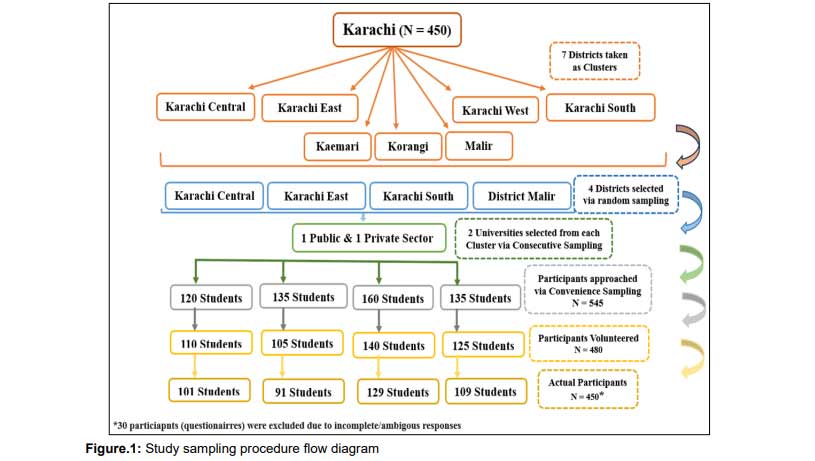
A multi-stage non-probability sampling technique was used. Four districts of Karachi (Central, South, East, and Malir) were selected for geographic and socioeconomic diversity. From each, two universities (one public and one private, where available) were chosen. Participants were then recruited by convenience sampling within campuses. (Figure 1). Data were collected via a self-administered structured questionnaire completed on-site under supervision to ensure completeness. The tool, developed after literature review, had four sections: demographics, lifestyle behaviours (including smoking), academic discipline, and sleep duration with self-reported changes. Sleep was categorized as <6, 6–8, and >8 hours based on the American Academy of Sleep Medicine and Sleep Research Society definition of ≥7 hours as optimal [11]. Smoking status classified individuals as smokers (cigarettes, e-cigarettes, or both) or non-smokers; former smokers were excluded. Face validity was confirmed by three health professionals, and a pilot with 30 students ensured clarity, leading to minor revisions. The final questionnaire is available as a supplementary file.
Data were analysed in SPSS version 25. Frequencies and percentages were summarized as categorical variables. Age distribution was positively skewed (Shapiro–Wilk p < 0.001); hence, the Kruskal–Wallis test was used for continuous and chi-square for categorical variables. As the proportional odds assumption was violated in ordinal regression (likelihood ratio χ² = 60.617, df = 3, p < 0.001), multiple logistic regression was applied to assess the association between smoking type and sleep habits, with odds ratios reported. The partially adjusted model controlled for age, gender, accommodation, study discipline, daily activity, and sleep pattern change. Ethical approval was obtained from the Institutional Review Board of the parent institution (ERC-KIMS/0014/22 dated 12-10-22).
Results
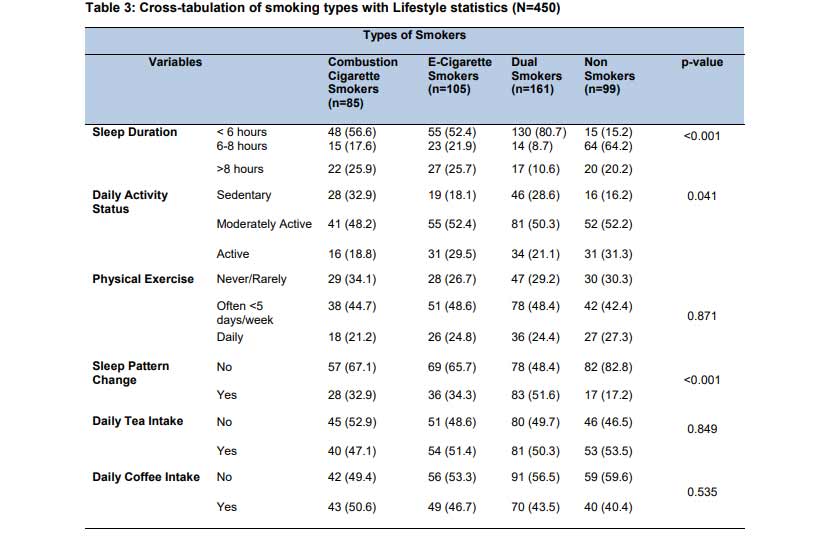
Table 1 presents the descriptive statistics of 450 participants. The mean age was 22.3 ± 2.24 years, with 76.7% males. Overall, 56.9% were hostel residents and 69.8% were from healthcare-related fields. Among all participants, 351 (78%) were smokers (traditional cigarettes, e-cigarettes, or both), while 99 (22%) were non-smokers.
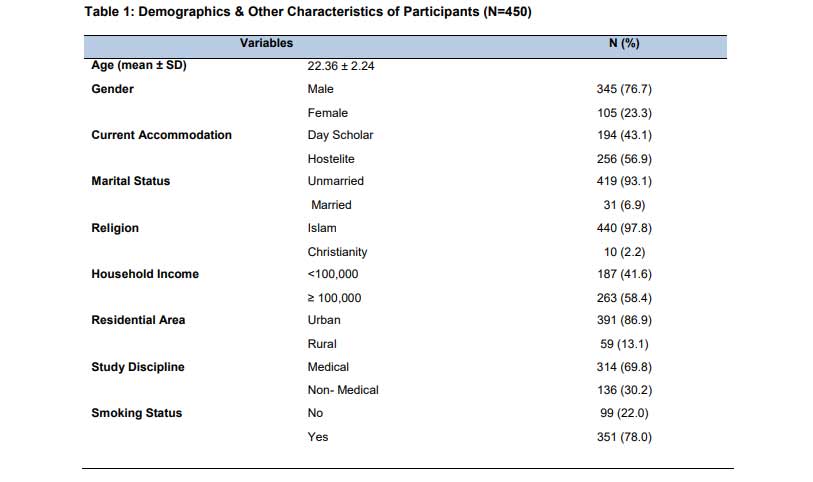
Table 2 presents the relationship between smoking status and socio-demographic traits. Students were categorized as combustible cigarette users, e-cigarette users, dual users, or non-smokers. E-cigarette users had a significantly younger median age (21.0; 16–29 years) compared with other groups (p = 0.005). Smoking status differed significantly by gender (p < 0.001) and accommodation (p = 0.003), with dual smoking more common among males (85.7%). While most participants across groups were from medical disciplines, the field of study also varied significantly (p = 0.002).
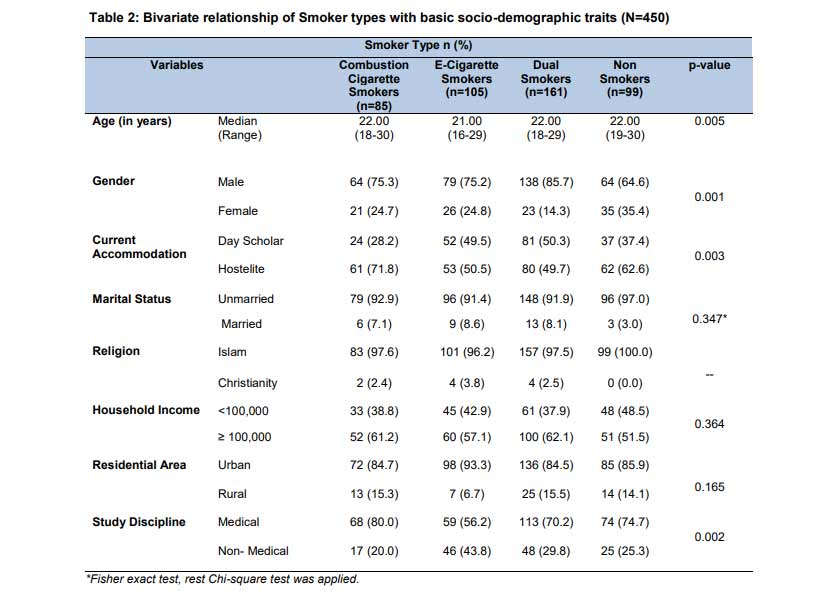
Lifestyle-related traits showed significant differences across smoking categories (Table 3). Sleep habits, daily activity status, and changes in sleep pattern varied notably, with most smokers in all three categories reporting <6 hours of sleep, whereas 64.2% of non-smokers reported 6–8 hours (p < 0.001). Physical exercise routines were comparable across groups (p = 0.871). Dual smokers more frequently reported recent changes in sleep patterns (51.6%) compared with other categories, where most reported no change (p < 0.001). In contrast, no significant association was observed with tea or coffee intake across categories (p = 0.849 and 0.525, respectively), nor with sleep habits in additional analysis (p = 0.429 and 0.458).
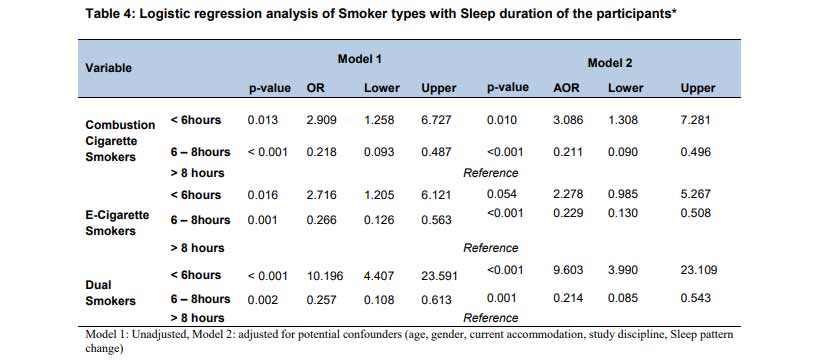
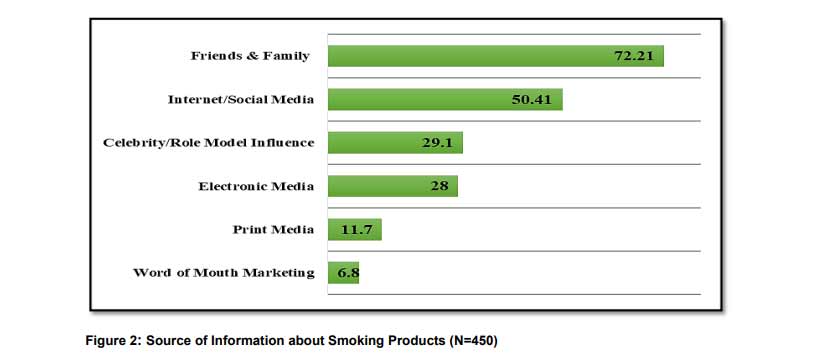
After adjustment for confounders, smoking status remained a significant predictor of sleep duration. Dual smokers had 9.6-fold higher odds of very short sleep compared with non-smokers (AOR 9.60; 95% CI: 3.99–23.11, p < 0.001), while cigarette-only smokers had 3.1-fold higher odds (AOR 3.09; 95% CI: 1.31–7.28, p = 0.010). E-cigarette users showed a marginal association (AOR 2.28; 95% CI: 0.99–5.27, p = 0.054). Other factors, including age, gender, residence, discipline, lifestyle, and sleep changes, were not significant (p > 0.05). Figure 2 illustrates the sources of information on smoking products. Friends and family were the most common source (72.2%), followed by social media and other internet platforms (58.4%). Celebrity or role model influence (29.1%), electronic media (28%), and print media (11.7%) were less frequent, while word-of-mouth marketing was least reported (6.8%).
Discussion
This study examined whether exclusive use of traditional combustible cigarettes, exclusive use of e-cigarettes, and dual use were associated with reduced sleep duration compared to non-smokers. Although awareness of tobacco use related harmful consequences has increasing, smoking remains one of the most difficult and challenging behavior to quit. The emergence of ENDS has further complicated smoking patterns and their impact on human health and wellbeing. The findings of the current study reveal that smoking either single or dual products users, smoking was significantly associated with reduced sleep duration and tobacco smoking. These findings highlight the prevalence and impact of different smoking behaviors among young adults that represents a substantial proportion of Pakistan’s population.
Gender disparities in smoking were evident and consistent with previous prevalence studies, which showed that males smoked at a ratio of 4:1 compared with females [12, 13]. Dual smoking was predominantly observed in males and similar gender differences were found in exclusive TCC and EC use. Other researchers, however, reported a narrower gender gap in EC use compared with TCC [14, 15]. These variations may be influenced by social, cultural and traditional norms [2]. In the current study cohort, smoking was highly prevalent among medical students, with 80% reporting TCC use, 56% EC use and 70% dual use. These figures are considerably higher than those mentioned by Alzalabani et al. (15.9%,15.7% and 5.7% respectively) [14] Similarly, a Saudi Arabian study revealed an overall prevalence of 14.1% among medical students [16]. We found an unusually high prevalence of both TCC and EC among medical student in particular which might be due to perceived stress relief regarding studies [5]. Secondly, use of different flavors in EC and the increased social acceptability and being a status symbol may be a cause of this high frequency of smoking [5]. However, the association is bidirectional regarding the academic pressure and use of smoking that effects sleep. This raises concern and suggests that academic pressures in the field of medicine or other unrecognized factors highlight the need for further exploration and targeted interventions.
The analysis demonstrated that dual smoking was significantly associated with sleep insufficiency among study participants, defined as less than eight hours by the American Academy of Sleep Medicine and less than seven hours by National Sleep foundation [17]. Dual smokers, as well as those who used either product alone, were more likely to report shorter sleep duration, particularly less than six hours. These results add to the mixed evidence in the literature by examining both cigarette and EC use in relation to sleep duration [7, 18, 19] Contrary to this, Kwon et al. found no association between sleep insufficiency and TCC or EC use [20]. These variations in results might be due to methodological differences. This study excluded tobacco products user other than smoking to reduce confounding effect, whereas Kwon et al. included all products user without adjustment [18]. Additionally, the current research compared TCC, EC, and dual user with non-smokers, while prior work averaged EC associations across smokers and non-smokers, without considering dual use interaction [18].
The social environment contributes signifcantly to the development of smoking behaviors in adolescents and young adults. Family and peer influences are the two most prominent social factors through which smoking behaviors are strengthened [21]. Parents act as the earliest and most consistent role models molding adolescents’ behavior towards smoking, while smoking practices among family elders can also affect children’s health related behaviors [21, 22] In this study, family and friends emerged as the primary sources influencing smoking (72.2%). Mercken et al. reported that young adults often choose friends based on smoking behavior rather than being directly influenced, indicating that peer influence is not the sole determinant of smoking [23, 24] Despite this, the present findings suggest a significant role of both family members and friends in encouraging smoking and served as primary sources of information about smoking products.
Conclusion
Cigarette smoking and sleep problems are prevalent in the general population, particularly among young adults. This study shows that dual use of tobacco and e-cigarettes is associated with a greater risk of reduced sleep duration compared with non-smokers. Longitudinal studies are needed to clarify the complex interplay between e-cigarette use, dual smoking, and behavioral and psychological factors influencing smoking habits.
ACKNOWLEDGMENT: The authors acknowledge the use of AI-based tools for language editing and clarity enhancement. The final content, interpretation, and conclusions remain the sole responsibility of the authors.
References
- Singh L, Jain P, Kumar C, Sinha DN, Kabir Z, Huque R, et al. Trends in age of tobacco use initiation over time in Bangladesh, India and Pakistan: analysis of cross-sectional nationally representative surveys. BMJ Open. 2023;13:e067875. http://doi.org/10.1136/bmjopen-2022-067875
- Song H, Yang X, Yang W, Dai Y, Duan K, Jiang X, et al. Cigarettes smoking and e-cigarettes using among university students: a cross-section survey in Guangzhou, China, 2021. BMC Public Health. 2023;23(1):438. http://doi.org/10.1186/s12889-023-15350-2
- World Health Organization. WHO global report on trends in prevalence of tobacco use 2000–2025, fourth edition. Geneva: WHO; 2021. https://iris.who.int/bitstream/handle/10665/348537/9789240039322-eng.pdf
- Shah MS, Qazi SU, Siddiqui AA, Iftikhar A, Wahid S, Siddiqui KA, et al. Prevalence of smoking habit and its associated factors among the students of public sector universities in Karachi. J Educ Soc Stud. 2023;4(3):578–84. http://doi.org/10.52223/jess.2023.4317
- Qureshi M, Mumtaz M. Adult perceptions of cigarettes and e-cigarettes: a Pakistan focus group study. Prev Med Rep. 2024;38:102619. http://doi.org/10.1016/j.pmedr.2024.102619
- Nayab D, Nasir M, Memon JA, Siddique O. The economic cost of tobacco-induced diseases in Pakistan. Pakistan Institute of Development Economics. 2021. https://file.pide.org.pk/pdfpideresearch/rr-041-the-economic-cost-of-tobacco-induced-diseases-in-pakistan.pdf
- Riehm KE, Rojo-Wissar DM, Feder KA, Mojtabai R, Spira AP, Thrul J, et al. E-cigarette use and sleep-related complaints among youth. J Adolesc. 2019;76:48–54. http://doi.org/10.1016/j.adolescence.2019.08.009
- Woo DH, Park M, Jang SY, Park S, Jang SI. Association between smoking status and subjective quality of sleep in the South Korean population: a cross-sectional study. Sleep Breath. 2023;27(4):1519–26. http://doi.org/10.1007/s11325-022-02726-8
- You MA, Choi J, Son YJ. Associations of dual use of tobacco cigarettes and e-cigarettes, sleep duration, physical activity and depressive symptoms among middle-aged and older Korean adults. Nurs Open. 2023;10(6):4071–82. http://doi.org/10.1002/nop2.1667
- Advani I, Gunge D, Boddu S, Mehta S, Park K, Perera S, et al. Dual use of e-cigarettes with conventional tobacco is associated with increased sleep latency in cross-sectional study. Sci Rep. 2022;12(1):2536. http://doi.org/10.1038/s41598-022-06445-8
- Watson NF, Badr MS, Belenky G, Bliwise DL, Buxton OM, Buysse D, et al. Recommended amount of sleep for a healthy adult: a joint consensus statement of the American Academy of Sleep Medicine and Sleep Research Society. J Clin Sleep Med. 2015;11(6):591–2. http://doi.org/10.5664/jcsm.4758
- Dever JA. Combining probability and nonprobability samples to form efficient hybrid estimates: An evaluation of the common support assumption. In: Proceedings of the 2018 Federal Committee on Statistical Methodology (FCSM) Research Conference. 2018. p. 1–15. https://www.fcsm.gov/assets/files/docs/A4_Dever_2018FCSM.pdf
- Bari SF, Zehra S, Qureshi FM, Aziz A. Profiles of childhood trauma: epidemiological survey results of an educated young community cohort. Int J Community Med Public Health. 2024;11(5):1822. http://doi.org/10.18203/2394-6040.ijcmph20241174
- Alzalabani AA, Eltaher SM. Perceptions and reasons of E-cigarette use among medical students: an internet-based survey. J Egypt Public Health Assoc. 2020;95(1):21. http://doi.org/10.1186/s42506-020-00051-0
- Balogh E, Wagner Z, Faubl N, Riemenschneider H, Voigt K, Terebessy A, et al. Increasing prevalence of electronic cigarette use among medical students: repeated cross-sectional multicenter surveys in Germany and Hungary, 2016–2018. Subst Use Misuse. 2020;55(13):2109–15. http://doi.org/10.1080/10826084.2020.1790011
- Qanash S, Alemam S, Mahdi E, Softah J, Touman A, Alsulami A. Electronic cigarette among health science students in Saudi Arabia. Ann Thorac Med. 2019;14(1):56–62. http://doi.org/10.4103/atm.ATM_76_18
- Merianos AL, Jandarov RA, Choi K, Fiser KA, Mahabee-Gittens EM. Combustible and electronic cigarette use and insufficient sleep among US high school students. Prev Med. 2021;147:106505. http://doi.org/10.1016/j.ypmed.2021.106505
- Kwon M, Park E, Dickerson SS. Adolescent substance use and its association to sleep disturbances: a systematic review. Sleep Health. 2019;5(4):382–94. http://doi.org/10.1016/j.sleh.2019.06.001
- Dunbar MS, Tucker JS, Ewing BA, Pedersen ER, Rodriguez A, Shih RA, et al. Frequency of e-cigarette use, health status, and risk and protective health behaviors in adolescents. J Addict Med. 2017;11(1):55–62. http://doi.org/10.1097/ADM.0000000000000272
- Kwon M, Seo YS, Park E, Chang Y. Association between substance use and insufficient sleep in U.S. high school students. J Sch Nurs. 2020. http://doi.org/10.1177/105984051990116
- Legleye S, Bricard D, Khlat M. Roles of parental smoking and family structure for the explanation of socio-economic inequalities in adolescent smoking. Addiction. 2023;118(1):149–59. http://doi.org/10.1111/add.16026
- Mercken L, Snijders TA, Steglich C, Vartiainen E, de Vries H. Dynamics of adolescent friendship networks and social behavior. Soc Netw. 2012;32:72–81. http://doi.org/10.1016/j.socnet.2009.02.005
- Mercken L, Steglich C, Sinclair P, Holliday J, Moore L. A longitudinal social network analysis of peer influence, peer selection, and smoking behavior among adolescents in British schools. Health Psychol. 2012;31:450–9. http://doi.org/10.1037/a0026876
- Moor I, Rathmann K, Lenzi M, Pförtner TM, Nagelhout GE, de Looze M, et al. Socioeconomic inequalities in adolescent smoking across 35 countries: a multilevel analysis of the role of family, school and peers. Eur J Public Health. 2015;25:457–63. http://doi.org/10.1093/eurpub/cku244