Abstract
Background: Midline laparotomy is a commonly performed surgical procedure. Postoperative pain and mobility are significant challenges affecting recovery. Abdominal binders are usually used postoperatively, but their effect remains controversial.
Objective: To compare the postoperative pain and early mobility among patients undergoing midline laparotomy with and without the use of an abdominal binder.
Method: Narowal DHQ teaching hospital was the location of the prospective randomized controlled trial used on 48 patients who underwent an elective midline laparotomy from January to June 2025 in two study groups. Group A (binder group), Group B (non-binder group). We assessed pain after surgery, the scale was a Visual Analog Scale (VAS), regarding pain on postoperative days 1st, 3rdand 5th and measured early mobility with the modified Barthel Index and time to first walk. Other outcomes included were postoperative complications such as wound infection and patient satisfaction. Data was entered on SPSS version 24.
Results: The difference between group A and B was significant in POD (post-op day)1, and POD 3 (P < 0.05) and was not significant on POD 5 in terms of post op mobility. The binder group had much lower VAS pain scores on POD 1 and POD 3 (P < 0.05) but not on POD 5. First ambulation time after surgery was Group A had a higher modified Barthel Index score on POD 3 and 5 (P < 0.05) than group B. The difference in wound complications or respiratory issues was not significant. Binder group had more patient satisfaction.
Conclusion: The use of abdominal binders following midline laparotomy is associated with less postoperative pain and earlier ambulation, thus improving recovery without increasing complications. Binders may be considered a beneficial adjunct in postoperative management.
Keywords: Abdominal, binder, Postoperative pain, early mobility, Laparotomy, Recovery
Introduction
Midline laparotomy is the surgical approach used for various abdominal procedures [1]. Despite its surgical exposure advantages, it is associated with postoperative pain and delayed mobility after the surgery. Pain can markedly compromise a patient’s ability to mobilize earlier after the procedure which can prolong recovery and hospital stay [2]. Early mobilization following abdominal surgery is a key to enhanced recovery after surgery (ERAS) [3]. Postoperative early mobility within the first one to two days is associated with improved gastrointestinal motility, reduces venous thromboembolism, decreases pulmonary complications and hospital stay [4]. Therefore, any intervention that allows early mobility can have a significant effect on recovery of the patient following the operation. Research into optimizing postoperative pain control goes on as it facilitates early mobilization and discharge [5]. The use of abdominal binder is one of such interventions [6]. Abdominal binder has been proven to improve seroma formation, respiratory patterns and posture. Its routine use in common procedures like laparotomy is justified [7],[8]. Also abdominal binders are known to be effective in mobility and protecting the wound but there has been no agreement on its effectiveness and their applicability is controversial to clinicians and conflicting as to its adverse effects such as respiratory difficulties or wound infection [9],[10]. In recent years, there have been growing arguments within the clinical and nursing society regarding the effect and clinical benefit of abdominal binders in improving postoperative results [11].
The abdominal binder theoretically provides support at surgical site, decreases the mechanical strain on the wound during movements, and enhances the patient’s sense of security that can psychologically reassure the patient, hence facilitate early mobility and reduce pain perception, although the scientific evidence surrounding these proposed benefits is still unclear [12].
Regarding patient’s satisfaction and perception, a patient-oriented approach to postoperative management may account for the subjective experience of recovery, which includes not only pain levels but also the psychological and emotional aspects of healing. The sense of support and satisfaction provided by an abdominal binder can increase the patient’s confidence in performing daily activities and ambulation, thereby improving overall satisfaction and recovery. Meanwhile, discomfort or inconvenience caused by the binder may discourage its continued use [13]. In this study we aimed to compare postoperative pain and early mobility outcomes in patients undergoing midline laparotomy, with and without application of abdominal binders. Our goal is to objectively assess whether the use of abdominal binders provides benefits in reducing pain and encourage early mobilization, thereby contributing to improved recovery. By addressing this, we hope to provide clinicians with clearer guidelines on whether the routine use of abdominal binders is justified in postoperative care for patients undergoing midline laparotomy.
Method
This randomized controlled trial study was performed in General Surgery department, Narowal medical college/DHQ teaching hospital Narowal within a period of 6 months (January 2025-June 2025). Study inclusion criteria were patients with age 20 to 70 years, undergoing any type of electively performed abdominal laparotomy on a benign or malignant lesions, and with an American Society of Anesthesiologists (ASA) physical status of up to 3. The patients were randomly allocated to group A and group B according to lottery procedure into group A (binder group) and group B (Non binder group). Patients who required postoperative ICU stay, had abdominal wall defect or hernia and emergency patients were excluded. WHO sample size calculator was used to calculate sample size of 48 patients [14].
After taking informed consent, a total of 24 participants were randomly divided by single blinded method into two groups. Group A (Binder Group) applied an abdominal binder immediately postoperatively and wore it continuously during waking hours for 5 days while Group B (Non-Binder Group) received standard postoperative care without wearing an abdominal binder. Data gathering was performed by investigator blinded to group’s identity. Measuring postoperative pain was done by using 10-point visual Analog Scale (VAS) on 1st, 3rd and 5th POD and early mobility, with the assistance of Modified Barthel Index, which is a device of measuring the degree of patient independent activities of daily living from point zero to 10.
Primary outcomes were post-operative pain, early mobility and need for analgesics. Secondary outcomes were wound problems like infections, dehiscence and respiratory complications such as atelectasis, and pneumonia. Patient satisfaction rate was rated based on 5-point Likert scale at POD 5. Likert scale is a 5-point instrument to measure steady conduct level of patients, as strongly disagree, strongly agree, disagree, agree, and indecisive. Analysis of data was done in SPSS v 26.0. The independent t-test was applied to compare continuous variables. For categorical variables, the chi-square test was used. The p-value was regarded as significant at a value below 0.05. Institutional review board ethical approval was taken by the IRB NO.29/2024 and all patients had informed consent prior to recruitment.
Results
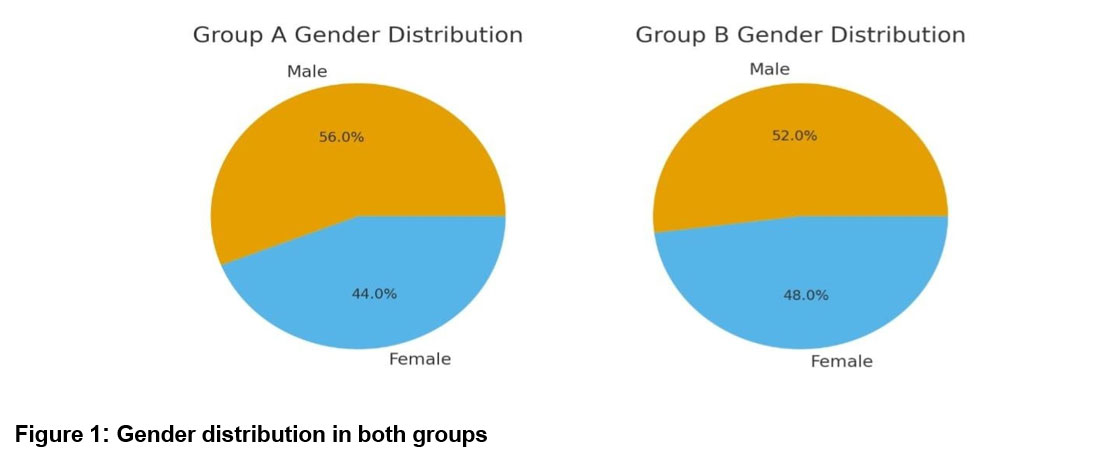
Patients age range was 18 to 70 years with mean age of 47.3 ± 10.1 in group A and 46.8 ± 9.7 in group B with equal number of patients of both sex having body mass index with normal range underwent exploratory laparotomy for abdominal pathology in both groups. Table 1, Figure 1

Post-operative pain was noted using visual analogue score in both groups. (Table 2) comparison of postoperative was also done using VAS in the two groups. (Figure 2) Patient’s early mobility and other complications like wound infection, respiratory complications and patient’s level of satisfaction was also noted. (Table 3, 4)

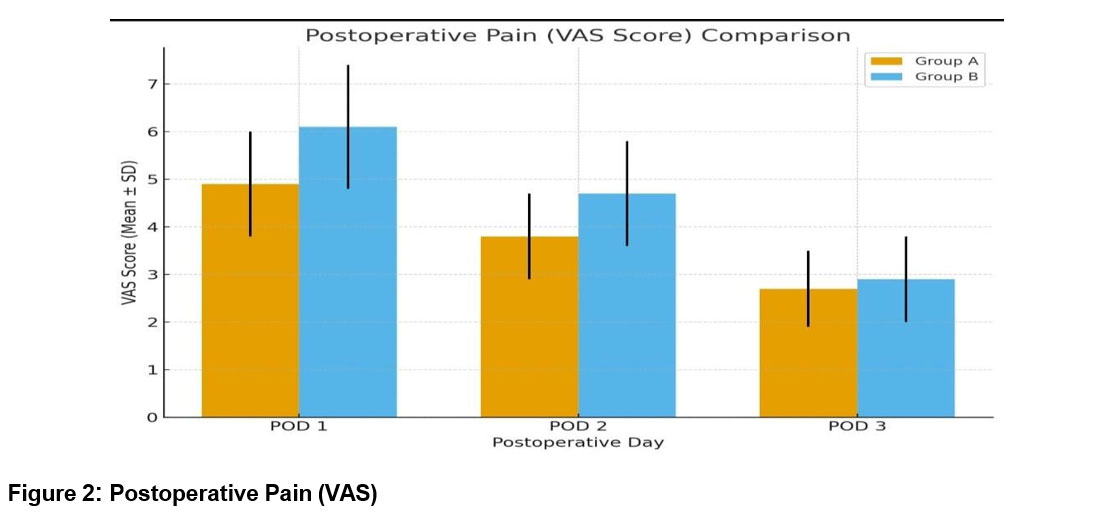
Table 3 shows the comparison of postoperative mobility in both groups


Discussion
This study demonstrates that application of abdominal binders following midline laparotomy can significantly reduce postoperative pain in the early postoperative period and facilitate earlier ambulation and functional recovery. These findings are consistent with previous study suggesting that binders may provide reduce strain on the wound and facilitate mobilization [15].
In present study, pain relief was most notable on POD 1 and 3, but by POD 5, the difference decreased, maybe due to natural recovery. While some studies have reported decreased pain scores, enhanced mobility, and improved overall comfort with the use of abdominal binders, others have found no significant difference or have even raised concerns about potential drawbacks, such as impaired respiratory function or delayed wound healing due to compression [16]. The conclusion of Watanabe J et al study is congruous to our study because the results found the use of elastic abdominal binder after laparotomy to enhance postoperative pain and mobility and is not dependent on pulmonary functions [10].
A meta-analysis conducted by Jiang et all reported that use of abdominal binders made no difference regarding its effect on postoperative pain and seroma formation but may have an impact on reducing the incidence of postoperative infection outcomes within the initial 14 days after surgery which is opposite to our study [12], [19]. A meta-analysis carried out by Herbert, P.R et al. also showed that abdominal binders did not make a difference with regard to their effect on pain and seroma due to enhancement within the first 14 days of surgery, but they further added that to affirm such findings, further experiments are necessary to establish more importantly that use of abdominal binders have effective role that is inclined to functional recovery of patients undergoing an abdominal laparotomy surgery is indeed in line with this study [21], [22]. In our study, binder use did not increase wounds or respiratory complications. So, it is emphasized that the use of abdominal binders seems sound, the existing body of literature presents mixed findings. Some randomized controlled trials and observational studies have demonstrated positive effects on postoperative pain and mobility, while others have failed to show statistically significant variations [23], [25]. in addition, variations in study design, patient population, duration of use of binder and outcome measures make it challenging to reach to ultimate conclusions., thus, there is a need for well-designed, prospective studies that can provide clearer evidence on the subject [24]. This study is limited as it is single-center design, relatively short follow-up, and reliance on subjective pain scoring. Further randomized controlled trials with long-term follow-up are advised.
Conclusion
Patients who used abdominal binders after midline abdominal laparotomy experienced significantly reduced postoperative pain compared to those without binders, especially during the early postoperative period. The binder group also demonstrated improved early mobilization, with earlier ambulation and greater ease of movement. Thus, the use of abdominal binders after midline laparotomy has its significance in reducing postoperative pain and enhanced recovery by early mobility without increasing complication rates. Binders represent a simple, cost-effective intervention that can be integrated into standard postoperative care protocols.
References
- Howle R, Ng SC, Wong HY, Onwochei D, Desai N. Comparison of analgesic modalities for patients undergoing midline laparotomy: a systematic review and network meta-analysis. Can J Anaesth. 2022;69(1):140–176. https://doi.org/10.1007/s12630-021-02128-6
- He Q, Lai Z, Peng S, Lin S, Mo G, Zhao X, Wang. Postoperative pulmonary complications after major abdominal surgery in elderly patients and its association with patient-controlled analgesia. BMC Geriatr. 2024;24(1):751. https://doi.org/10.1186/s12877-024-05337-y
- Zhang L, Wu Q, Wang X, Zhu X, Shi Y, Wu CJ. Factors impacting early mobilization according to the Enhanced Recovery after Surgery guideline following gastrointestinal surgery: a prospective study. Geriatr Gerontol Int. 2024;24(2):234–239. https://doi.org/10.1111/ggi.14799
- Ammar AS, Naqi SA, Khattak S, Noumani AR. Outcome of abdominal binder in midline abdominal wound dehiscence in terms of pain, psychological satisfaction and need for. Pak J Med Sci. 2021;37(4):1118–1121. https://doi.org/10.12669/pjms.37.4.3671
- Farooqui A, Ahmad S, Bokhary P, Amin H, Rashid M, Shah MH. Effectiveness of early ambulation on recovery after elective abdominal surgery. Insights J Health Rehabil. 2025;3(4):328–334. https://doi.org/10.71000/6h3fx402
- Edinger-VanAtta. In a bind: Effect of abdominal binding on postoperative pain in abdominal surgery patients. The Downtown Review. 2022;8(2). Available at: https://engagedscholarship.csuohio.edu/tdr/vol8/iss2/1
- Mitura K, Pajer M, Kacprzak L, Mitura B, Antosik K, Leszczynski PK, et al. The true purpose of the use of abdominal binders after incisional hernia repair: a comprehensive literature review. Pol Przegl Chir. 2025;97(3):79–88. https://doi.org/10.5604/01.3001.0055
- Khalid IB, Babar M, Ahmed. Post-operative use of abdominal binders: Bound to tradition? J Cancer Allied Spec. 2022;8(2):463. https://doi.org/10.37029/jcas.v8i2.463
- Sun X, Wei Q, Fu C, Zhang Q, Liang Z, Peng L, Chen L, He C, Wei Q. Effects of abdominal binders on postoperative pain and functional recovery: a systematic review and meta-analysis. Pain Med. 2021;22(10):2174–2184. https://doi.org/10.1093/pm/pnab099
- Bakhtiari S, Borujeni T, Anvari F. The effects of using abdominal binder on pain intensity and mobility after cesarean section: a blind clinical trial. J Exp Clin Med. 2024;41:34–39. https://doi.org/10.52142/omujecm.41.1.6
- Ossola P, Mascioli F, Coletta D, Pizzato M, Bononi. Evidence on postoperative abdominal binding: a systematic review with meta-analysis of randomized controlled trials. The Surgeon. 2021;19(6):e473–e482. https://doi.org/10.1016/j.surge.2020.07.003
- Hassan SI, El-Feshawy NI, Ahmed. Effect of elastic abdominal binder on post cesarean pain, distress, mobilization and women’s satisfaction. Egypt J HealthCare. 2021;12(1):364–382. https://doi.org/10.21608/ejhc.2021.141875
- Charan J, Kaur R, Bhardwaj P, Singh K, Ambwani SR, Misra S. Sample size calculation in medical research: a primer. Ann Natl Acad Med Sci (India). 2021;57(2):74–80. https://doi.org/10.1055/s-0040-1722104
- Saeed S, Rage KA, Memon AS, Kazi S, Samo KA, Shahid S, Ali A. Use of abdominal binders after a major abdominal surgery: a randomized controlled trial. Cureus. 2019;11(10):e5832. https://doi.org/10.7759/cureus.5832
- Elzahaby I, Nour DA. Effectiveness of abdominal binders in lowering postoperative pain and distress after cesarean delivery: a systematic review and meta-analysis of randomized controlled trials. Evid Based Womens Health J. 2025;15(15):1–3. https://doi.org/10.21608/ebwhj.2024.345721.1404
- Gad MM, Mohamed AA, Abd El-Galil HM, et al. Pattern of cesarean deliveries among women in an urban and rural district in Egypt. Afr Health Sci. 2022;22:375–385. https://doi.org/10.4314/ahs.v22i4.43
- Watanabe J, Kasahara N, Kiyasu Y, Yamaguchi H, Sata N. Abdominal binders after abdominal surgery: a systematic review and meta-analysis. Am J Surg. 2025;116451. https://doi.org/10.1016/j.amjsurg.2025.116451
- Jiang N, Hao B, Huang R, Rao F, Wu P, Li Z, et al. The clinical effects of abdominal binder on abdominal surgery: a meta-analysis. Surg Innov. 2021;28(1):94–102. https://doi.org/10.1177/1553350620974825
- Ramos T, Topa P, Carvalho A, Castro C, Moreira H, Martins A, Alves S. The benefits of a binder in the postoperative period of abdominal surgery: an integrative literature review. Health Soc. 2023;3(3):5–21. https://doi.org/10.51249/hs.v3i03.1400
- Ortiz PR, Lorenz E, Meyer F, et al. The effect of an abdominal binder on postoperative outcome after open incisional hernia repair in sublay technique: a multicenter, randomized pilot trial (ABIHR-II). Hernia. 2023;27:1263–1271. https://doi.org/10.1007/s10029-023-02838-4
- Abd-ElGawad M, Said Ali A, Abdelmonem M, Elshamy NH, Abdeltawab AK, Abd El-Shafea M, et al. The effectiveness of the abdominal binder in relieving pain after cesarean delivery: a systematic review and meta-analysis of randomized controlled trials. Int J Gynaecol Obstet. 2021;154(1):7–16. https://doi.org/10.1002/ijgo.13607
- Paasch C, Santo G, Aljedani N, Ortiz P, Bruckert L, Hünerbein M, Lorenz E, Croner RS. The effect of an abdominal binder on postoperative pain after laparoscopic incisional hernia repair—ABIHR-I. Dtsch Arztebl Int. 2021;118(37):607–613. https://doi.org/10.3238/arztebl.m2021.0250
- Michot N, Ortega-Deballon P, Karam E, Pabst-Giger U, Ouaissi M. Is there a clinical benefit of abdominal binders after abdominal surgery: a systematic literature review? J Abdom Wall Surg. 2024;3:13506. https://doi.org/10.3389/jaws.2024.13506
- Fonseca MK, Rizental LB, da Cunha CEB, et al. Applying enhanced recovery principles to emergency laparotomy in penetrating abdominal trauma: a case-matched study. Eur J Trauma Emerg Surg. 2024;50:2123–2135. https://doi.org/10.1007/s00068-024-02577
- Ahmed A, Ahmed MI, Iqbal Y, Kamran A, Ahmed M, Ali AMF. The effect of abdominal binders on mobilization and pain in the postoperative period after emergency laparotomy. Pak J Med Health Sci. 2022;16(10):785–787. https://doi.org/10.53350/pjmhs221610785